Exploring Chinese Black Tea Types and Regions
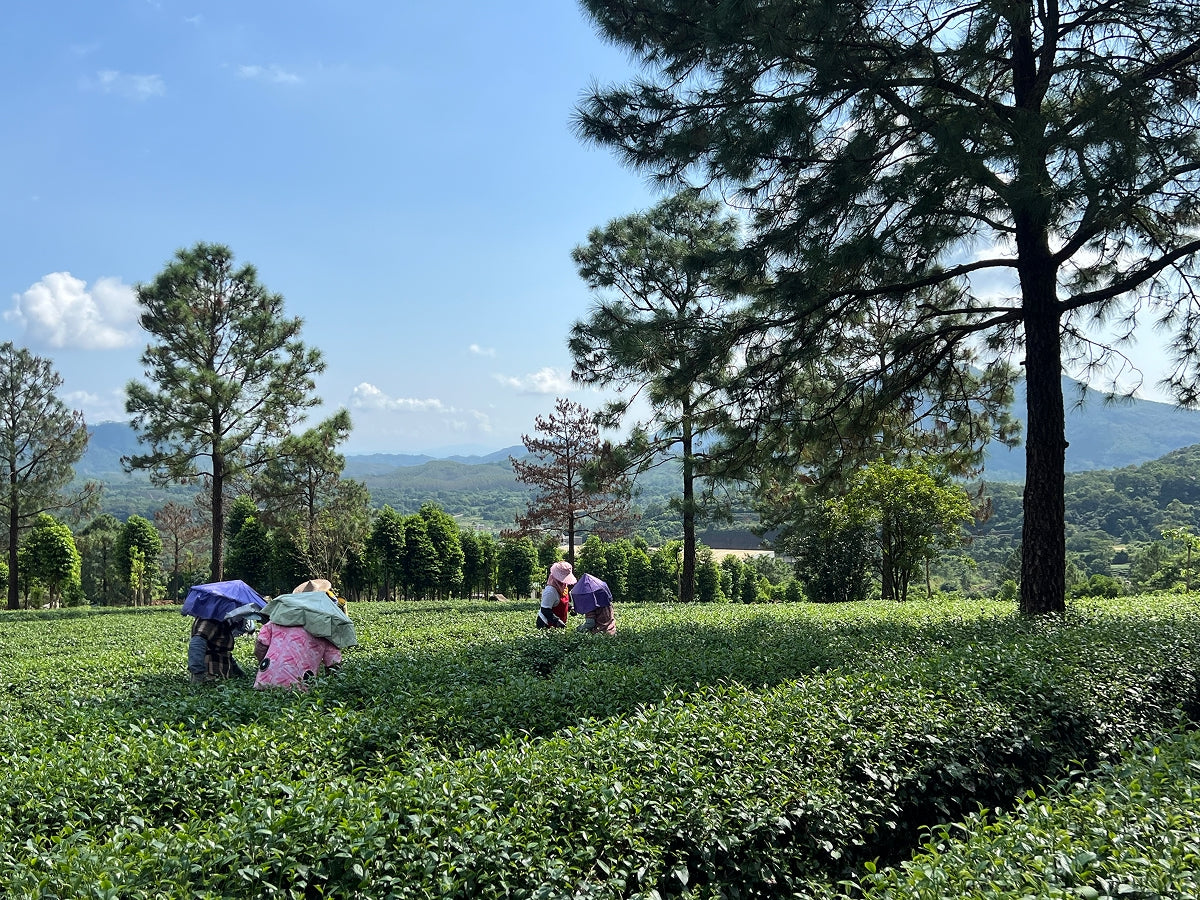
Chinese black tea is produced across a wide range of tea-growing regions in China, with different areas developing their own regional traditions. Fujian, Anhui, and Yunnan represent several important examples, but they are part of a much broader landscape of black tea production across China.
Local tea plant varieties, growing environments, harvesting standards, and craftsmanship all contribute to these regional differences. As a result, Chinese black tea types are often closely associated with their places of origin and traditional production methods.
Rather than treating one region or style as representative of all Chinese black tea, understanding these regional traditions provides a more useful way to explore the diversity within the category.
Fujian Black Tea: Zheng Shan Xiao Zhong and Jin Jun Mei
Fujian has an important place in the history of Chinese black tea, particularly in the Wuyi Mountains. Zheng Shan Xiao Zhong (Lapsang Souchong) is closely associated with Tongmu and represents one of the region’s best-known black tea traditions.
The Wuyi region is also associated with Jin Jun Mei (Golden Eyebrow). Although Zheng Shan Xiao Zhong and Jin Jun Mei share a connection with the same broader tea-growing region, differences in raw material, picking standards, and craftsmanship give them distinct identities.
Traditional Zheng Shan Xiao Zhong styles are often associated with a distinctive smoky character, while Jin Jun Mei can show a more delicate sweetness with honeyed, floral, or fruity notes. These are characteristic expressions rather than fixed flavor profiles, and individual teas can vary with raw material and craftsmanship.
Anhui Black Tea: Qimen (Keemun)
Qimen black tea, widely known internationally as Keemun, originates from Qimen County in Anhui Province and represents another important regional tradition of Chinese black tea.
Different Qimen teas can vary in raw material, picking standard, shaping, and craftsmanship. Qimen Xiang Luo (Keemun Fragrant Spiral), for example, is distinguished in part by the curled or spiral form of its finished leaves.
Qimen black tea can show a distinctive fragrance with floral, fruity, and sometimes orchid-like notes. These expressions can vary among individual teas, while tea names and finished-leaf forms alone should not be treated as measures of quality.
Yunnan Black Tea: Dian Hong
Black tea from Yunnan is commonly known as Dian Hong, with Dian referring to Yunnan and hong referring to red tea. Yunnan black tea is commonly associated with the region’s large-leaf tea plant material, giving it a different raw-material foundation from many black tea traditions in other parts of China.
Dian Hong itself includes different styles and finished forms. Dian Hong Jin Luo (Yunnan Golden Snail), for example, refers to a style in which the finished leaves are shaped into a curled or spiral form.
Dian Hong can range from rich and full-bodied to softer styles, with malty, honeyed, or other sweet aromatic notes appearing in some teas. These are possible expressions rather than fixed characteristics, and neither finished form nor regional name alone determines the quality of an individual tea.
Beyond the Major Regional Traditions
Fujian, Anhui, and Yunnan represent only part of the broader geography of Chinese black tea. Black tea is also produced in other tea-growing areas across China, where different tea plant varieties, local environments, and regional craftsmanship have contributed to their own traditions and styles.
The diversity of Chinese black tea therefore extends well beyond a small number of famous origins. As different regional teas are explored and introduced, they add further expressions to the wider tradition of black tea from China.
Understanding Region, Tea Name, and Style
The name of a Chinese black tea may refer to its place of origin, a regional tea tradition, its finished form, or a particular style of production. These concepts can be closely related, but they are not interchangeable.
Knowing whether a tea is Zheng Shan Xiao Zhong, Qimen, or Dian Hong provides useful information about its origin and tradition. Understanding an individual tea, however, also requires considering its raw material, harvest, craftsmanship, and how it performs in the cup.
For this reason, Chinese black tea is better understood through both its regional tradition and the individual tea, rather than by assuming that every tea carrying the same regional name will have exactly the same character.