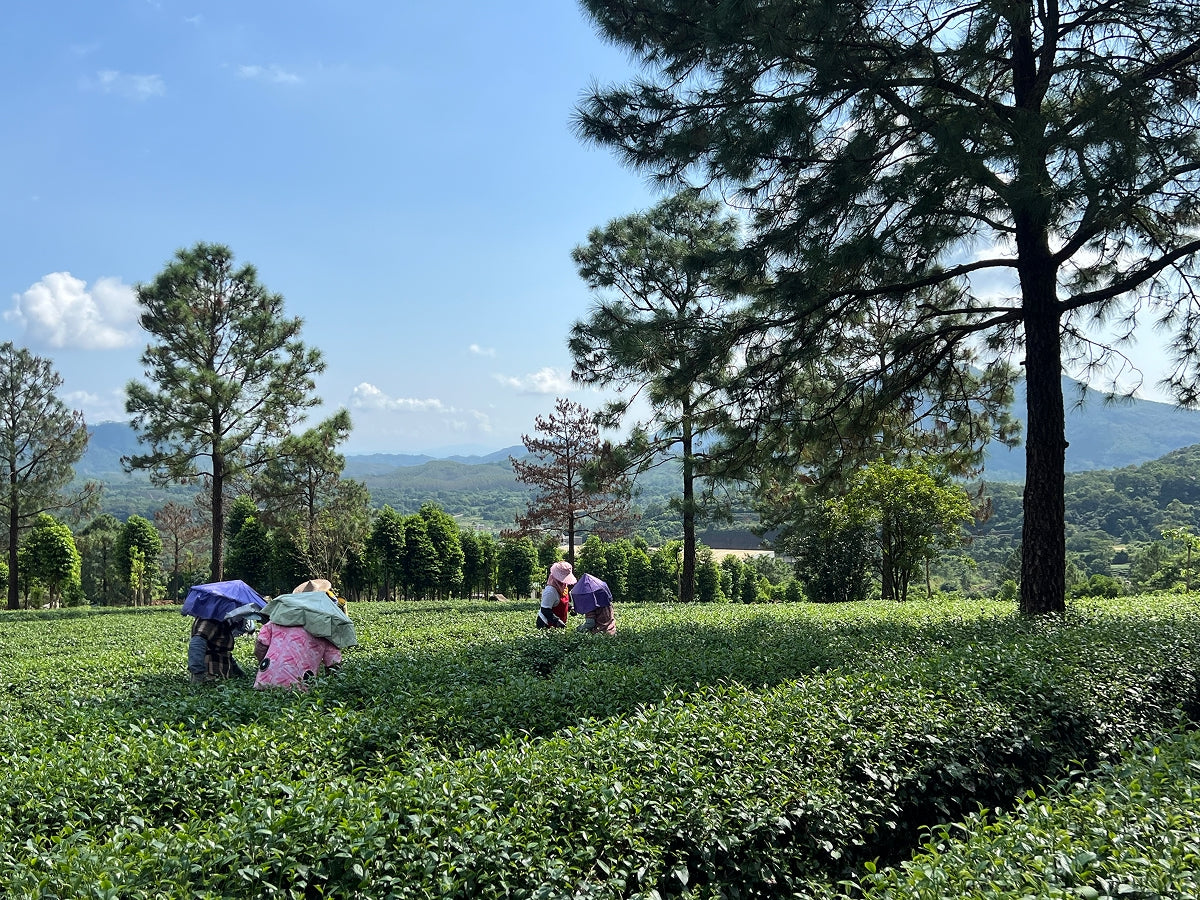


2024 Xiao Hu Sai Raw Pu-erh Tea Cake


2024 Xiao Hu Sai Raw Pu-erh Tea Cake
Yunnan Pu-erh (Pu’er)
This 2024 Raw Pu-erh Tea Cake comes from Xiao Hu Sai, a remote mountain village in Yunnan Province. In the local language, the name means "a place hidden from discovery."
Fittingly, the tea produced here is often regarded as one of the few teas among the Mengku Eighteen Villages capable of rivaling the character of Bingdao, one of Yunnan's most highly regarded Pu-erh-producing areas.
This secluded village sits halfway up the slopes of Mengku Snow Mountain, with two rivers flowing on either side of the settlement.
The area is rich in ancient tea trees. Unlike many tea regions where prices are determined primarily by tree age, Xiao Hu Sai tea is traditionally valued according to the quality of the soil.
Local tea-farming families divide their inherited tea gardens into five different grades based on terroir.
The finest and most expensive teas come from the "Red Soil" area, the highest-elevation gardens closest to the mountain. Tea grown there is considered:
- the most balanced
- the smoothest
- the sweetest
This is one reason it is often compared to Bingdao, as Bingdao tea is also associated with red-soil terroir.
The next tier is known as "Stone Soil," named for its rocky terrain.
More than a thousand years ago, the Chinese tea sage Lu Yu wrote in the classic work The Classic of Tea: "The finest tea grows among weathered rocks."
This principle has also been demonstrated in the famous tea mountains of Wuyi (the Wuyi Mountain region), where the celebrated rock oolongs are cultivated among rocky cliffs and are considered some of the finest oolong teas in China.
The remaining grades are:
- Bamboo Grove Soil
- Village-Edge Ancient Trees (tea gardens located closer to the residential area)
- Black Soil
Our 2024 Xiao Hu Sai Raw Pu-erh Tea Cake is made from fresh leaves harvested from the Stone Soil gardens, ranking second among the five recognized terroir grades of this production area.
Aroma
Dry Leaf Aroma
The leaves are thick, robust, and dark green with an oily sheen.
When smelled dry, they offer a gentle honey-like sweetness accompanied by a subtle cool mineral character reminiscent of mountain stone.
Warmed Cup Aroma
After warming the cup, the fragrance rises with pronounced floral notes reminiscent of wild orchids and mountain blossoms.
Beneath the floral aroma lies a layer of rock sugar sweetness.
The profile shares some similarities with Bingdao tea, though it presents itself in a more delicate and refined manner.
Liquor Aroma
The floral fragrance is integrated into the tea liquor itself, supported by a clean and lingering rock sugar sweetness.
Taste
Early Infusions (1–3)
On the palate, the tea is soft, sweet, and smooth, with virtually no bitterness or astringency.
The liquor feels fine and silky, while sweetness quickly emerges across the tongue and cheeks.
A distinct rock-sugar sweetness is present.
Compared with Bingdao, the sweetness is slightly less intense, but it is complemented by a clearer mineral character.
Middle Infusions (4–6)
The body of the liquor becomes thicker and more substantial.
A slight astringency may appear briefly but dissipates quickly, followed by a lively, lasting mouth-watering sensation.
At this stage, the characteristics of the Stone Soil terroir become more apparent.
A cooling sensation develops in the throat, followed by a refreshing sweetness that returns like mountain spring water.
The tea remains balanced, full-bodied, and expressive without becoming aggressive.
Later Infusions (7–10+)
Bitterness and astringency largely fade away.
The liquor remains sweet and smooth, revealing notes reminiscent of bamboo leaves and gentle woody sweetness.
The tea has excellent endurance, maintaining a stable rock-sugar-like sweetness even after ten infusions.
Overall Assessment
This 2024 Xiao Hu Sai Raw Pu-erh Tea Cake combines the softness and elegance of the liquor with the strength and vitality often associated with mountain-grown Pu-erh.
Its character leans toward clean sweetness supported by a firm underlying structure.
The aroma is deep and refined rather than overtly intense, while the liquor balances softness with strength.
Particularly noteworthy are the cooling mineral notes derived from its rocky soil and the exceptionally persistent returning sweetness.
These qualities allow this second-tier terroir grade to deliver remarkable drinking value.
It is well suited to tea drinkers who appreciate a tea that is sweet, refined, and nuanced while still retaining a distinctive mountain character.
Although it has only been aged for two years, it is already highly enjoyable to drink today and also shows excellent potential for long-term aging and transformation.
Not sure if this tea suits your taste? Try a sample and follow our brewing guide.