

2024 Mei Zi Qing Raw Pu-erh Tea Cake


2024 Mei Zi Qing Raw Pu-erh Tea Cake
Yunnan Pu-erh (Pu’er)
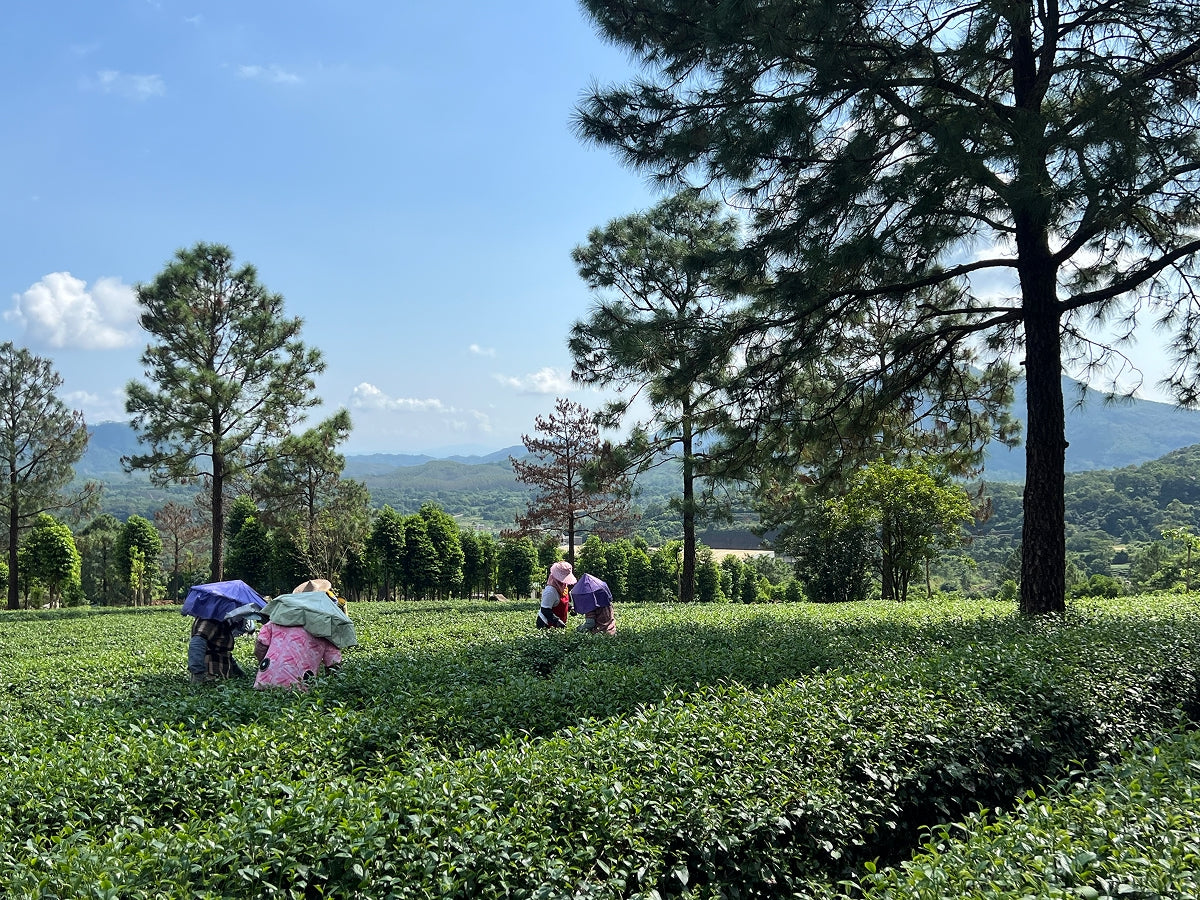
2024 Mei Zi Qing Raw Pu-erh Tea Cake is produced in Mei Zi Qing Village, Xiaomengtong Town, Yongde County, Lincang City, Yunnan Province, China, at an altitude of approximately 1,900 meters. The name of the village literally means “Plum Valley Village.” Tea from this area is renowned for its distinctive plum-like aroma, which inspired the region’s name.
Origin and Terroir
Geographic Location
The village sits at the confluence of the Wandian and Mubang tea regions, providing a unique microclimate for tea cultivation.
Historical Background of Tea Cultivation
Historically, there are records of wild tea tree domestication in this area.
Modern Tea Garden Composition
Today, most tea gardens are planted with large-leaf tea trees transplanted from different parts of Yunnan, resulting in a variety of cultivars. Ancient trees are very limited.
Sourcing History and Market Development
First Discovery by Chinese Tea Group
The sourcing team of Chinese Tea Group, which specializes in Yunnan Pu-erh tea, first discovered this micro-production area in 2015:
- Production scale: small
- Market recognition: low
- Tree age sorting: not yet implemented
- Blended maocha price: approximately USD 30 per kilogram
- Tea cake output: around 2.5 kg of maocha could produce seven standard 357g raw Pu-erh tea cakes
Market Position and Early Economic Conditions
Compared with other famous mountain regions, these prices were low. Limited income reduced farmers’ motivation, leading to minimal plantation management and largely natural growth conditions. Yields remained low.
Tea master Huang Zijun was struck by the scene: in such a high-altitude region capable of producing premium Pu-erh, villagers were still intercropping peas among the tea trees.
Market Evolution from 2017 to 2024
By spring 2017, with the Pu-erh tea market booming, raw material prices began to rise sharply. The price of Mei Zi Qing maocha nearly doubled.
By 2020, tea enthusiasts began to seek out this region for its minimal human intervention and unique flavor profile, causing prices to rise steadily.
By the time of this 2024 batch, the cost of blended raw materials—including ancient trees, large arbor trees, and younger trees—had increased fivefold compared to 2015.
Flavor Profile (Fresh Tea Stage)
The brewed liquor of the 2024 Mei Zi Qing Raw Pu-erh Tea Cake is a pale golden yellow, clear, bright, and slightly oily. The first impression on the palate is remarkable purity, with almost no off-flavors, evoking the crisp mountain air and mineral-rich soil of 1,900 meters.
Aroma
A signature plum fragrance runs through every sip:
- Top note: fresh green plum with a lively, tart aroma
- Mid note: softens into a gentle candied fruit sweetness
- Cup finish: delicate honeyed scent lingers
Taste
The liquor is smooth, naturally sweet, and only lightly bitter. Any astringency—a typical feature of raw Pu-erh—is subtle and quickly dissipates. Thanks to the naturally grown ancient and large arbor trees, the body has a wild, expansive structure, offering depth and layering.
Aftertaste (Hui Gan)
The most memorable feature is the cooling sensation in the throat, reminiscent of a preserved plum.
- Lingering sweetness lasts for a long time
- Even after multiple infusions, subtle fruity acidity and gentle sweetness remain
- Leaves a lasting impression of highland wilderness
Overall Sensory Impression
Overall, this 2024 Mei Zi Qing Raw Pu-erh Tea Cake conveys a crisp mountain character, accented by plum and candied fruit aromas—elegant, restrained, and refined.
Positioning and Long-Term Value
In the world of Chinese tea, micro-origins are highly prized, and Mei Zi Qing is a truly promising village-level origin for raw Pu-erh. Its charm lies not only in ancient trees or tender buds, but in its low-intervention, wild cultivation style, which imparts a rare purity and a distinctive character.
It is not a bold, overpowering famous-mountain tea, but a cool, understated “mountain hermit”—quiet and serene at first sip, gradually revealing its story and layers with each infusion.
Not sure if this tea suits your taste? Try a sample and follow our brewing guide.