

2016 He Kai Raw Pu-erh Tea Cake


2016 He Kai Raw Pu-erh Tea Cake
Yunnan Pu-erh (Pu’er)
This 2016 He Kai aged Pu-erh tea cake (raw Sheng Pu-erh) comes from the ancient tea gardens of Hekai Mountain in southeastern Menghai County, Yunnan Province. As a representative tea from Menghai, it embodies both the regional character of Hekai and the aging potential that makes aged Pu-erh highly prized by tea enthusiasts worldwide.
The area is approximately a 40-minute drive from Menghai town and is traditionally home to the Lahu people.
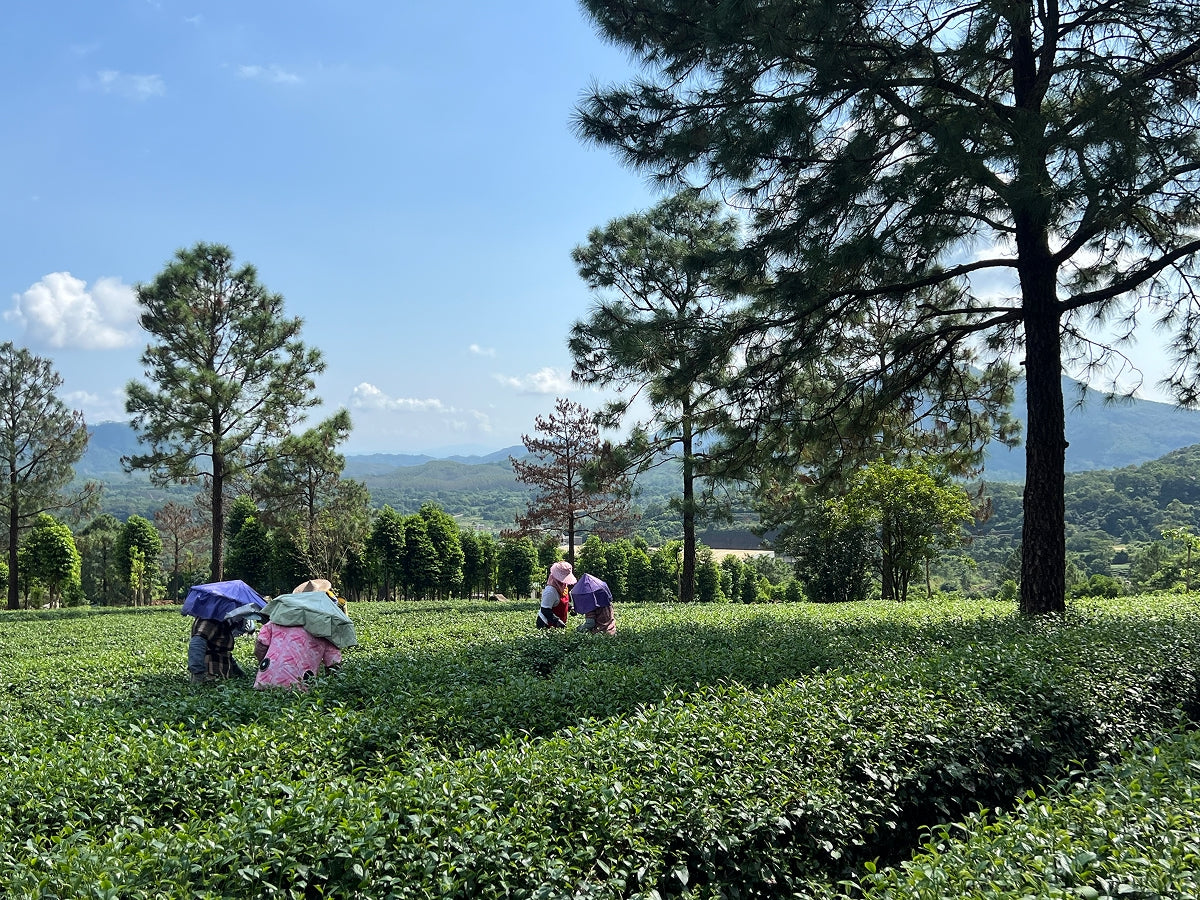
For generations, the Lahu have lived in close connection with the surrounding forests and tea trees, helping preserve one of the most impressive ancient tea-growing regions in Menghai. Today, Hekai's ancient tea trees are known not only for their age and vitality, but also for the beauty of the tea gardens themselves.
Leaf Material – Ancient Tea Tree Leaves
The leaves used for this tea are primarily larger, sturdier leaves harvested from ancient tea trees. This style of leaf material is commonly valued in ancient-tree tea for its depth, structure, and long-term aging potential.
While finer buds often receive more attention in the market, these larger leaves can offer exceptional value, especially when sourced from old trees with deep root systems and strong regional character.
One of Hekai's most distinctive traits is what local tea drinkers often describe as a "sand-smooth" texture. It is a unique mouthfeel that sits somewhere between noticeable astringency and smoothness. Combined with Hekai's characteristic forest aroma, it creates a tea that feels both powerful and elegant, with a personality all its own.
The "Feather Tea" Character of Hekai
Among Yunnan's large-leaf tea varieties, local tea makers sometimes refer to certain tea trees as "Feather Tea," because of the dense covering of silvery-white hairs found on young buds and leaves.
Trichomes – A Sign of Tender, High-Quality Leaf Material
These fine hairs, known as trichomes, are often considered an indicator of tender, high-quality leaf material. They contain compounds that contribute directly to the tea's aroma, texture, and flavor profile, including:
- Amino acids, especially L-theanine → contribute sweetness and smoothness
- Aromatic compounds → create delicate floral and downy aromas
- Polyphenols → provide structure while remaining relatively gentle
- Natural caffeine → adds liveliness without excessive bitterness
- Proteins, minerals, and waxes → enhance body and texture
The ancient tea trees of Hekai are particularly known for this characteristic. As a result, this 2016 He Kai Raw Pu-erh Tea Cake (Sheng) develops an appealing sweetness, rich fragrance, and a smooth, layered mouthfeel that continues to evolve with age.
This distinctive "Feather Tea" character is one of the hallmarks of Hekai's ancient tea gardens.
Nine Years of Natural Aging
After nine years of natural aging, the youthful sharpness once associated with this tea has largely faded. This aged raw Pu-erh tea has developed a smoother, deeper, and more integrated character while retaining the distinctive personality of Hekai.
The liquor is now sweet, smooth, and well-rounded, with a comfortable texture and a pronounced returning sweetness (hui gan, a lingering sweet aftertaste). The distinctive forest character remains, but the youthful intensity has matured into greater depth and balance. Notes of honey, aged wood, and lingering bud fragrance emerge throughout the session.
The tea is now fully expressive on the palate, sweet and mellow, with little remaining astringency. The finish is long, clean, and satisfying. It is enjoyable now as an example of well-aged mid-term Pu-erh, while still offering further aging potential for those who wish to continue storing it.
For tea drinkers interested in exploring aged Sheng Pu-erh tea, this tea offers an approachable introduction to the complexity that develops through long-term natural storage.
About the Leaf Material
In Yunnan Pu-erh tea, larger leaves should not be simply regarded as lower quality.
Tender buds and larger leaves each express different characteristics of the tea. Bud-heavy material is often more expensive because it contains higher concentrations of certain compounds and requires more labor-intensive harvesting and sorting.
However, larger leaves from ancient tea trees can also deliver excellent flavor, texture, and aging potential, making them especially suitable for producing high-quality ancient-tree Pu-erh tea.
Our Perspective on Pu-erh Tea Evaluation
When evaluating Pu-erh tea, we place greater importance on tree age, origin, and overall character than on leaf size alone.
Rather than viewing finer material as inherently superior, we see different leaf grades as offering different expressions of the same landscape. Fine buds and larger leaves each reveal unique aspects of a tea's personality, and neither should be judged solely by appearance.
Why Choose This 2016 He Kai Raw Pu-erh Tea Cake (Sheng)?
Whether you are new to Sheng Pu-erh tea or an experienced tea drinker, this 2016 He Kai Raw Pu-erh Tea Cake (Sheng Tea) offers an excellent opportunity to experience the character of aged Hekai ancient-tree Pu-erh tea at an approachable price.
As a naturally aged raw Pu-erh tea, it showcases the distinctive forest character, smooth texture, and lasting sweetness that have made Hekai tea highly regarded among Pu-erh enthusiasts.
Highlights
- Produced from ancient tea trees in Hekai, Menghai County
- Naturally aged for nine years
- Distinctive "sand-smooth" mouthfeel characteristic of the Hekai region
- Sweet, smooth, and approachable with little remaining astringency
- Forest aroma, honey notes, aged character, and lingering sweetness
- Excellent introduction to aged Pu-erh tea
-
Strong value among naturally aged ancient-tree tea offerings
Not sure if this tea suits your taste? Try a sample and follow our brewing guide.