See the tea liquor of our 2012 Imperial Grade (Gong Ting) Shou Pu-erh loose leaf tea
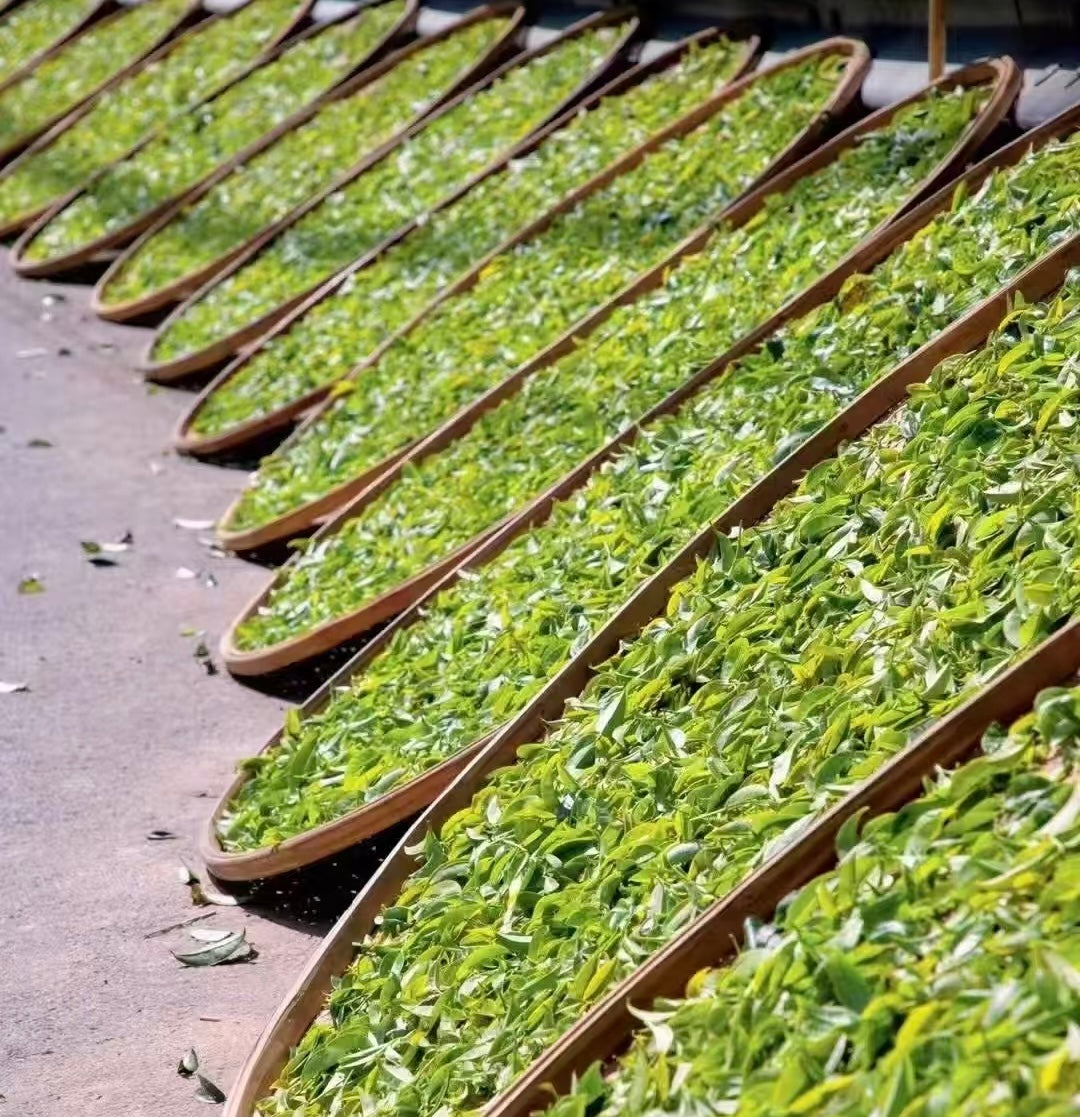
This loose-leaf Shou Pu-erh tea is a 2012 Imperial Grade tea (literally translated in Chinese as “Gong Ting Grade Ripe Pu’er Tea”), made from sun-dried large-leaf Mao Cha from Yunnan and produced using the wet-piling fermentation method developed in the mid-1970s.
Raw (Sheng) Pu-erh tea has a history spanning thousands of years. Shou Pu-erh, however, was developed long after the era of imperial tribute teas. Why, then, was the name ‘Imperial Grade Pu-erh Tea’ adopted?
The Origin of the “Imperial Grade” Name
Standards and Market Background
- As national tea masters of the Chinese Tea Group, we note that the term “Imperial” does not exist in national tea standards or official tea evaluation terminology.
- In the 1990s, Japanese and Korean markets were particularly focused on the health benefits of Shou Pu-erh tea and preferred loose teas with delicate appearance.
- When exporting Yunnan tea, tender buds and leaves were specially selected beyond the existing “Special Grade” category.
- To distinguish them from Special Grade teas, the market gradually began referring to these teas as “Imperial Pu-erh” or “Gong Ting Ripe Pu’er,” a name that originated purely from market demand.
Market Consensus
- Any tea named “Imperial Pu-erh Tea” inevitably refers to a Shou Pu-erh made from high-quality tender buds, not raw Pu-erh.
- Imperial-grade Pu-erh teas are commonly sold in loose-leaf form, which has become a market consensus.
Aged Imperial Shou Pu-erh – Dry Tea
Through detailed photos taken at our physical tea house, you can observe the dry tea characteristics of 2012 Imperial Grade loose-leaf Shou Pu-erh:
- Leaves slightly shrink on the surface, dry yet tight, short, and sturdy.
- Color: reddish-brown.
- Aroma: gentle aged scent with a hint of sweet rice notes.
Some tea enthusiasts may describe this mixed aroma as “old wood” or “medicinal,” while a few may perceive an “earthy” note. However, these are not mainstream and may cause misunderstanding.
We understand that describing aroma and flavor often reflects personal preference and familiar sensory memory.
Regardless, no tea should have any harsh off-flavors, such as sour, rancid, moldy, or chemical odors.
Brewing and Tasting Experience
Using gongfu tea techniques, I brewed this 2012 Imperial Grade aged loose-leaf Shou Pu-erh tea with 6g of tea leaves in 150ml of water, yielding a moderate-strength infusion.
Rinsing the Tea (Washing)
- Pour boiling water over the leaves.
- Allow the leaves to unfold, releasing fragrance immediately.
- Wet aroma: clean aged scent with hints of old wood and mild sweetness.
- No pile-fermentation odor or off-flavors.
This rinsing infusion is not meant for drinking but is a necessary step for all Pu-erh teas.
Official Brewing Phase
Infusions 1–2 (Awakening Phase)
- Liquor color: deep red and bright, clear, slight oiliness.
- Aroma: cup lid aroma with aged scent plus glutinous notes; clinging aroma shows the mellow character of aged tea.
- Taste: smooth entry, slightly thin liquor, subtle sweetness on the tongue, with a delicate throat sensation.
Infusions 3–4 (Peak Phase)
- Liquor color: deep, transparent red, resembling wine or ruby, with a noticeable oil ring.
- Aroma: primarily aged scent, with glutinous and woody notes merging; fragrance is stable and full-bodied, felt in the mouth rather than through smell.
- Taste: rich and full, thick and smooth (like a gentle rice porridge), sweet with no off-flavors, smooth throat sensation.
Infusions 5–6 (Stable Phase)
- Liquor color: still red and bright, slightly lighter.
- Aroma: dominated by aged character; medicinal scent diminishes.
- Taste: maintains mellow richness, sweetness persists, slight reduction in thickness.
Brewing tip: Now increase steeping time to 10–15 seconds, adjusting to taste.
Infusions 7–8 (Tail Phase)
- Liquor color: bright orange-red, gradually lighter.
-
Aroma: light sweet date or sugar aroma, with woody undertones remaining.
- Taste: noticeable lingering sweetness, refreshing and smooth.
Infusions 9–10 (Final Phase)
- Liquor color: light red.
- Aroma: faint sweet aroma, nearly absent.
- Taste: light tea flavor, smooth, with the liquor’s thickness almost gone.
Brewing Tips
- When brewing loose-leaf Shou Pu-erh tea in large teapots or cups, prioritize taste as the main guide; color is secondary.
- Multiple trials help establish a correlation between liquor color and flavor.
- Adjust strength: too strong – reduce tea amount or steeping time; too weak – increase tea amount or steeping time.
Note: Standard liquor colors vary across tea types; even within the same type, leaf thickness affects color.
Comparison with Other Products
Loose Leaf Shou Pu-erh Tea - 2012 Imperial Grade compared to our 2019 Gong Ting Grade Ripe Pu’er:
- More pronounced aged character developed over time.
- Smoother and thicker liquor.
- Better integration of soluble compounds with water.
Tasting Value of Aged Pu-erh Tea
If you enjoy Pu-erh tea—whether loose-leaf or compressed—and seek a depth that transcends the bright freshness of new teas, the aged charm and rarity of a properly stored Shou Pu-erh await you, to be discovered one steep at a time. “The older, the more aromatic” is not merely a saying; it is an invitation to explore and savor the unique layers that time has developed.
Not sure if this tea suits your taste? Try a sample and follow our brewing guide.
Try Sample & View Guide