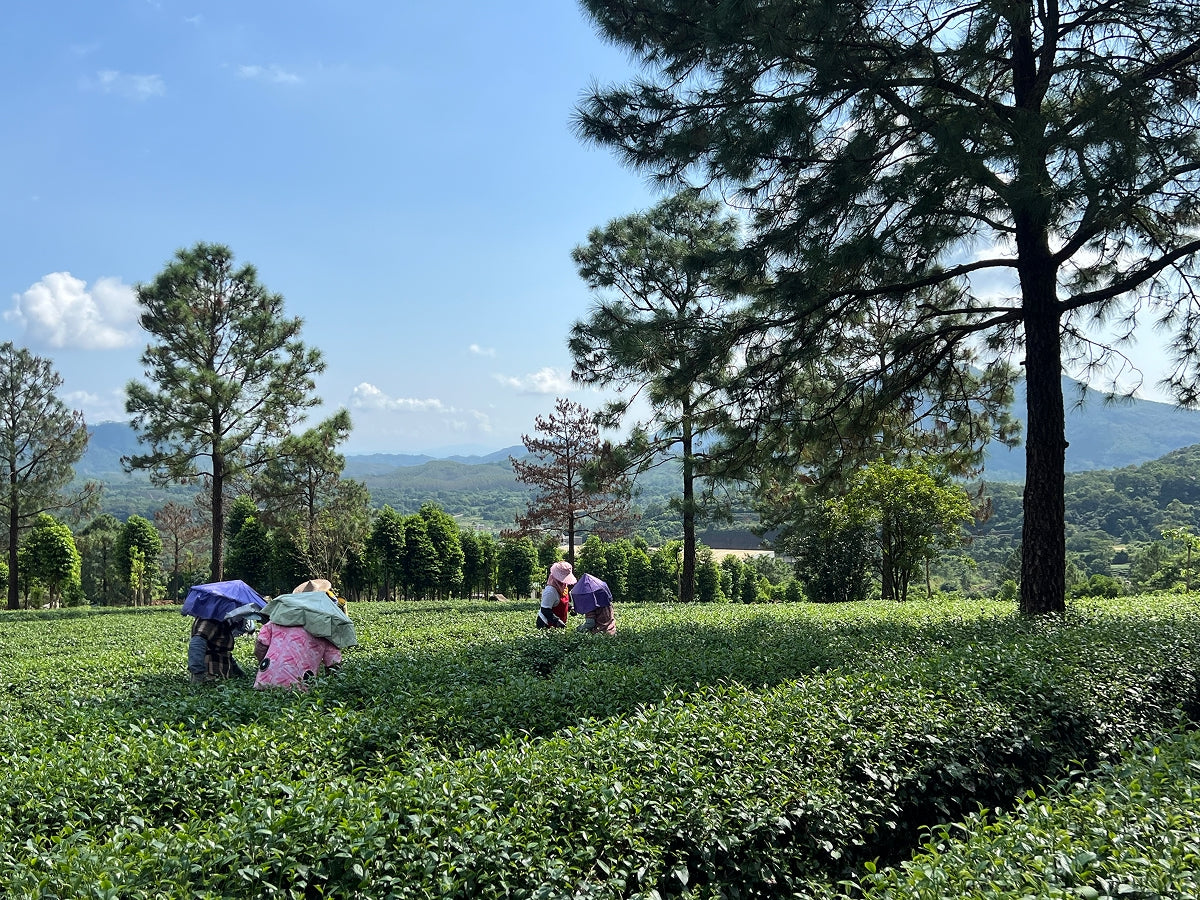


2026 Bulang Mountain Raw Pu-erh Tea Cake


2026 Bulang Mountain Raw Pu-erh Tea Cake
Yunnan Pu-erh (Pu’er)
The 2026 Bulang Mountain Raw Pu-erh Tea Cake is made from carefully selected large-leaf tea trees grown in the core region of Bulang Mountain (Brown Mountain), Yunnan. This region is one of the most historically significant and highly regarded tea mountains in the world of Pu-erh.
The leaves were harvested in spring 2026, traditionally sun-dried, and stone-pressed into a tea cake.
Bulang Mountain is known for producing teas with a distinct and powerful mountain character.The region’s complex microclimates and high-elevation forests give rise to teas with a deep bitterness, pronounced structure, and a fast-returning sweetness that unfolds in layers. For many collectors and experienced tea drinkers, this intensity is what makes Bulang teas especially valuable for long-term aging.
Natural Character
As a young raw Pu-erh, this 2026 production retains a high concentration of naturally occurring tea polyphenols and caffeine due to minimal oxidation during processing.
Key Flavor Profile
- A deep, structured bitterness
- A vibrant and lively mouthfeel
- A pronounced sense of tea qi (often described as a feeling of vitality)
- A long, evolving sweet aftertaste
Rather than defining function, these compounds are best understood as the foundation of the tea’s character and sensory depth.
Tasting Experience
This tea is particularly appreciated by those who enjoy bold, expressive raw Pu-erh. Its structure is direct and energetic, with a clear transition from bitterness to sweetness that lingers on the palate.
Many tea drinkers prefer to enjoy teas of this style after meals, when the palate is open to stronger and more textured flavors.
Tasting Highlights
- Structured and focused
- Bold yet balanced
- Highly expressive in aroma and mouthfeel
- Long and evolving finish
It is a style that reflects the raw, untamed nature of Bulang Mountain itself.
Aging Potential
Like all high-quality raw Pu-erh teas, this tea is designed to evolve over time.
Transformation Over Time
- The sharp edges soften
- The liquor becomes smoother and rounder
- The aroma deepens and becomes more complex
- The overall character shifts toward greater harmony
This transformation is one of the most valued aspects of traditional Pu-erh tea.
Who This Tea Is For
Ideal For
- Drinkers who appreciate strong mountain character
- Those who enjoy structured bitterness with a sweet finish
- Collectors interested in long-term Pu-erh aging potential
- Tea drinkers who prefer bold, expressive teas after meals
Final Note
If you are looking for a raw Pu-erh tea with a strong sense of origin, a bold and structured profile, and excellent aging potential, this 2026 Bulang Mountain Raw Pu-erh Tea Cake offers an authentic expression of its terroir.
You may also explore our broader Pu-erh collection (Pu’er Tea) to discover teas at different stages of aging, from vibrant young teas to smoother, more mature profiles.
About “Chinese Weight Loss Tea” & “Fat-Reducing Tea”
If you discovered this tea through search terms such as “Chinese weight loss tea” or “fat-reducing tea,” please note: tea is a traditional food product. The references to tea polyphenols, catechins, and caffeine are provided solely to explain the tea’s natural composition and sensory profile.

Gongfu Tea Brewing Guide
(Traditional Method)
Always rinse tea before the first infusion. For compressed teas, adjust the rinsing time according to the compression level, allowing the leaves to gently loosen before the first infusion.
| Water Temperature | 100°C (212°F) |
| Tea-to-Water Ratio | 7g tea per 160ml water |
| Steeping Time | |
| Brews 1–5 | Steep for 4–7 sec |
| Brews 6–10 | Steep for 8–15 sec |
| Brews 11–15 | Steep for 16–30 sec |
Tips: Tea masters recommend steeping times based on each tea's unique flavor, starting the timer after pouring the water.
Common Brewing Guide
(Easy Everyday Preparation)
| Water Temperature | 100°C (212°F) |
| Leaf-to-Water Ratio | 2g per 120ml |
| Steeping Time | About 1–2 minutes |
| Subsequent Infusions | Increase by 30 seconds each time |
Tips: You can adjust the steeping time or leaf-to-water ratio to suit your taste—shorten the infusion for a lighter brew or extend it for a stronger one.