

2024 Lin Cang Ancient Tree Raw Pu-erh Tea Cake


2024 Lin Cang Ancient Tree Raw Pu-erh Tea Cake
Yunnan Pu-erh (Pu’er)
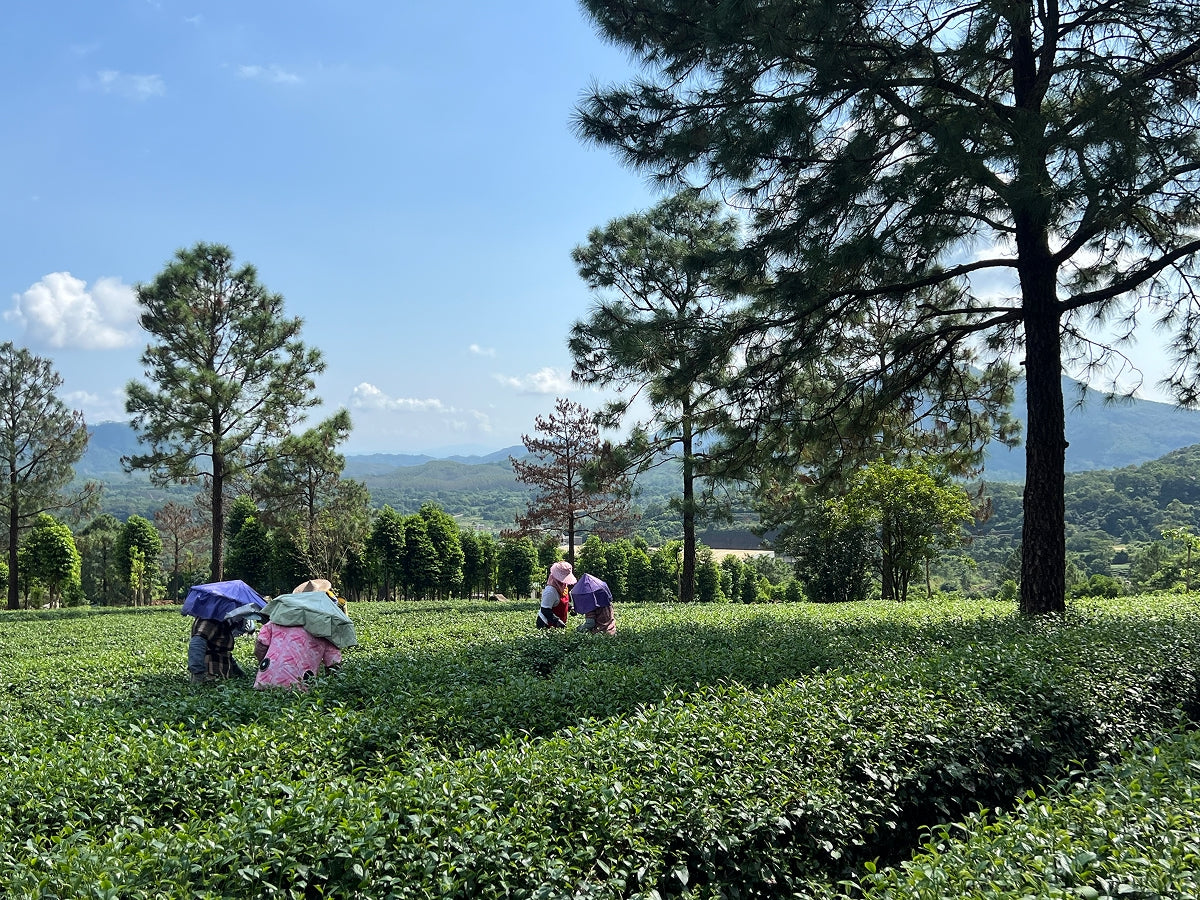
The 2024 Lin Cang Ancient Tree Raw Pu-erh Tea Cake comes from Lincang, located in southwestern Yunnan Province, China.
Lincang is one of the most important production areas for large-leaf sun-dried tea leaves and is often referred to as the “Tea Storehouse of the World.”
In China, roughly one out of every three cups of Pu-erh tea is made from raw material sourced from this region.
Historical records suggest that more than 3,000 years ago, the ancient Pu people living in Lincang had already discovered, used, and cultivated tea trees.
The famous “Jinxiu Tea Ancestor”, found in this region, is estimated to be around 3,200 years old and remains one of the most representative ancient tea trees in existence.
The region is home to extensive ancient tea tree forests, including high-mountain growing areas at 2,200–2,750 meters (7,218–9,022 feet), where numerous tea trees over 1,000 years old can still be found. These forests are widely regarded as living fossils of tea history.
This tea was developed with support from the local Pu-erh Tea Association, aiming to:
- Help tea farmers reduce intermediary distribution channels.
- Connect more directly with tea enthusiasts.
The Chinese Tea Group tea master team carefully blended:
- Spring-harvested ancient tree leaves from different elevations and micro-regions across Lincang.
- Tea trees aged approximately 100–200 years.
- Leaves compressed into traditional tea cakes.
Freshly produced in 2024 as a raw (Sheng) Pu-erh tea, it is still in the early stage of natural aging and transformation, offering tea lovers a genuine opportunity to experience Lincang ancient tree Pu-erh.
Dry Leaf Appearance
Real photos of the tea clearly show its appearance and brewing characteristics.
- Leaf structure: thick, well-defined leaves with visible silver buds.
- Surface: slightly glossy.
- Dry aroma: clean and refreshing, with light floral notes.
Aroma Development During Brewing
Rinse Infusion
- Leaves gradually unfurl in hot water, releasing a distinct mountain aroma.
- Steam carries freshness and wild character.
- Cup aroma: blend of sweetness and floral notes.
Early Infusions (1–3)
- Aroma is bright and expressive, with floral notes prominent.
- As the cup cools, a lingering sweetness with gentle cooling sensation is perceived—characteristic of Lincang tea.
Middle Infusions (4–7)
- Aroma becomes balanced and stable.
- Floral notes integrate into the liquor, transforming into softer honey-like sweetness.
- Subtle woody or forest-like notes may appear depending on the material.
Late Infusions (8+)
- Aroma becomes delicate, with plant-like and grain-like sweetness.
- Sweetness continues to persist even as overall aroma intensity decreases.
Taste and Mouthfeel
Bitterness and Astringency
- Young raw Pu-erh contains bitterness and astringency due to natural compounds.
- In high-quality tea, these sensations fade quickly, transforming into sweetness and salivation.
Rock Sugar–Like Sweetness
- Sweetness is clear and clean, persistent throughout the tasting process.
- As brewing continues, sweetness becomes softer and well-integrated.
Texture
- Tea liquor is full-bodied, smooth, and refined, with noticeable depth and thickness.
Returning Sweetness & Salivation
- After swallowing, sweetness gradually emerges in mouth and throat.
- Many drinkers notice increased salivation, leaving the mouth fresh and hydrated.
Throat Feel & Tea’s Invigorating Effect
- Lasting, gentle sweetness remains in the throat.
- Continued drinking may bring a mild warming sensation and mental clarity.
Steeping Longevity
- Can withstand 15+ infusions under normal brewing conditions.
- Even in later steeps, pleasant sweetness and aroma remain.
About Bitterness and Astringency
We do not avoid the natural bitterness and astringency inherent in raw Pu-erh tea, especially in young teas under five years, where these traits are almost always present.
This is not a flaw, but a vital part of the tea’s structure, adding complexity and creating the sweetness and salivation that develop in later infusions.
Professional tasters evaluate not whether bitterness exists, but its intensity, how quickly it transforms, and the type of sweetness and mouthfeel it produces.
Young raw Pu-erh almost always exhibits some level of bitterness and astringency. Experiences may vary between drinkers, but the essential question remains: does this bitterness and astringency evolve into a pleasant, enjoyable cup? If so, it is a truly good tea.
Conclusion
Thanks to direct sourcing and reduced storage costs, the 2024 Lin Cang Ancient Tree Raw Pu-erh Tea Cake offers an accessible opportunity to explore the character of ancient tree Pu-erh.
Going forward, we will continue working closely with tea farmers in Yunnan’s core tea-producing regions to discover and share distinctive, high-quality Pu-erh teas with tea lovers worldwide.
Not sure if this tea suits your taste? Try a sample and follow our brewing guide.