

2023 Da Xue Shan Ancient Tree Raw Pu-erh Tea Cake


2023 Da Xue Shan Ancient Tree Raw Pu-erh Tea Cake
Yunnan Pu-erh (Pu’er)
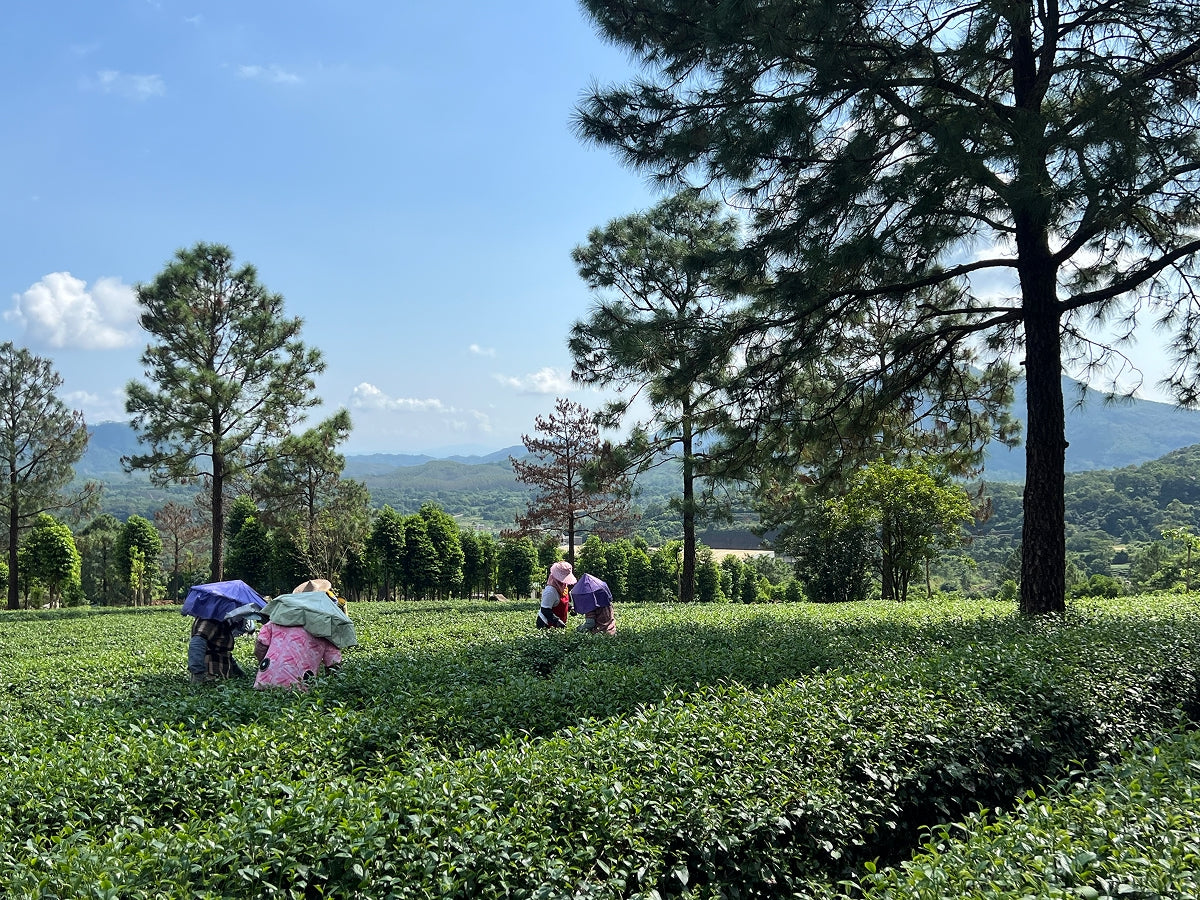
2023 Da Xue Shan Ancient Tree Raw Pu-erh Tea Cake from Yunnan Province, China — a region known for its mild, spring-like climate all year.
Between the Nanbi River and Meng River in Lincang lies a 3,233-meter mountain range. Thanks to winter snowfall, it’s called Shuangjiang Da Xue Shan, also known as Mengku Da Xue Shan, widely recognized as the birthplace of the Mengku large-leaf tea varietal.
Da Xue Shan (Big Snow Mountain) & Its Ancient Tea Forests
"Da Xue Shan" literally means "Big Snow Mountain." Inside its primeval forests, between 2,200 and 2,750 meters above sea level, grow over 12,000 mu (around 800 hectares or 1,980 acres) of wild ancient tea tree communities.
These trees have grown naturally for centuries, and many are incredibly old. Among them stands the famous "No. 1 Wild Ancient Tea Tree," estimated at 2,700 years old — one of the largest ancient tea trees in the world.
Cultivated Ancient Tea Gardens
Along the mountain slopes between 1,400 and 2,200 meters, you’ll find cultivated ancient tea gardens, with most trees aged between 100 and 500 years.
Our 2023 Da Xue Shan Ancient Tree Raw Pu-erh Tea Cake is made from spring-harvested leaves taken from trees that are 200–250 years old, growing at elevations of 2,000 to 2,200 meters.
Same Production Area as Our Limited Releases
This is the same production area as several of our sold-out or limited-release Da Xue Shan Pu-erh teas, including the 2008 Big Snow Mountain Aged Raw Pu-erh Tea Cake.
Product Format & Pricing Strategy
With the growing fame of this region in recent years, Pu-erh tea prices have risen significantly.
So for this 2023 batch, we purposely pressed the tea into 100g mini-cakes — smaller than the usual size — to bring down the price per cake and let more tea lovers enjoy high-quality raw Pu-erh tea from Mengku, Shuangjiang, Yunnan.
2023 Climate Conditions & Leaf Characteristics
2023 was the year after an El Niño cycle. Spring brought drought, low rainfall, and higher-than-average temperatures. That resulted in:
- later but denser sprouting;
- lower moisture content in the fresh leaves, with higher concentrations of polyphenols and aromatic compounds;
- stronger bitterness and astringency than typical years, but also a more assertive palate presence and a quick yet lingering sweetness (hui gan).
Aging Potential & Drinking Value
In short, this batch offers better aging potential and drinking value than most previous vintages.
For tea drinkers who like pronounced cha qi, layered complexity, or long-term aging, this tea is highly rewarding — whether you drink it now or save it for later.
Recommendation for Beginners
If you’re a beginner, or if you prefer soft, gentle, and sweet teas, this one may feel too intense during its first five years.
In that case, we’d recommend trying the 2025 Raw Pu-erh Tea Cake (Sheng Pu'er) — a fresher, more approachable option.
Appearance & Dry Leaves (from our physical tea house)
Based on images taken at our physical tea house, you can observe:
- The tea cake displays tightly twisted strips in deep dark green with a slightly bluish tone.
- This deep color reflects a high concentration of polyphenols, providing strong “fuel” for microbial activity and oxidation during early aging.
- As a result, the transformation speed during the first 3–5 years is faster than in lower-elevation or less concentrated teas.
- The dry leaves also carry a faint woody aroma when gently warmed or smelled closely.
Tasting Notes
- Complex aroma blending pine resin and floral honey
- Thick, rich, full-bodied tea liquor
- Deep, persistent hui gan (returning sweetness)
- Cooling sensation in the throat
- Pronounced cha qi, often felt as warmth in the back and palms
Mini Cake Format & Aging Potential
The 100g mini-cake lowers the barrier to entry, allowing more tea lovers to experience the pure, powerful cha qi of high-elevation ancient tree tea. With proper storage, after 3–5 years the woody aroma will become more prominent, intertwining with honey sweetness to reach an optimal drinking stage. Given the overall rise in Pu-erh tea prices, this mini-cake offers an affordable way to explore high-end ancient tree tea.
Final Drinking Impression
Even at its current stage, the 2023 Da Xue Shan Ancient Tree Raw Pu-erh Tea Cake is ideal for those who enjoy bold flavors and layered complexity within subtle bitterness and astringency.
Explore More Raw Pu-erh Teas
We also offer a selection of raw Pu-erh teas (Sheng Pu'er) from other core production regions for you to explore.

Gongfu Tea Brewing Guide
(Traditional Method)
Always rinse tea before the first infusion. For compressed teas, adjust the rinsing time according to the compression level, allowing the leaves to gently loosen before the first infusion.
| Water Temperature | 100°C (212°F) |
| Tea-to-Water Ratio | 8g tea per 160ml water |
| Steeping Time | |
| Brews 1–5 | Steep for 4–8 sec |
| Brews 6–10 | Steep for 9–20 sec |
| Brews 11–15 | Steep for 21–35 sec |
| Brews 16+ | Steep for 35+ sec |
Tips: Tea masters recommend steeping times based on each tea's unique flavor, starting the timer after pouring the water.
Common Brewing Guide
(Easy Everyday Preparation)
| Water Temperature | 100°C (212°F) |
| Leaf-to-Water Ratio | 2g per 100ml |
| Steeping Time | About 1–2 minutes |
| Subsequent Infusions | Increase by 30 seconds each time |
Tips: You can adjust the steeping time or leaf-to-water ratio to suit your taste—shorten the infusion for a lighter brew or extend it for a stronger one.