

2020 Wan Gong Raw Pu-erh Tea Cake


2020 Wan Gong Raw Pu-erh Tea Cake
Yunnan Pu-erh (Pu’er)
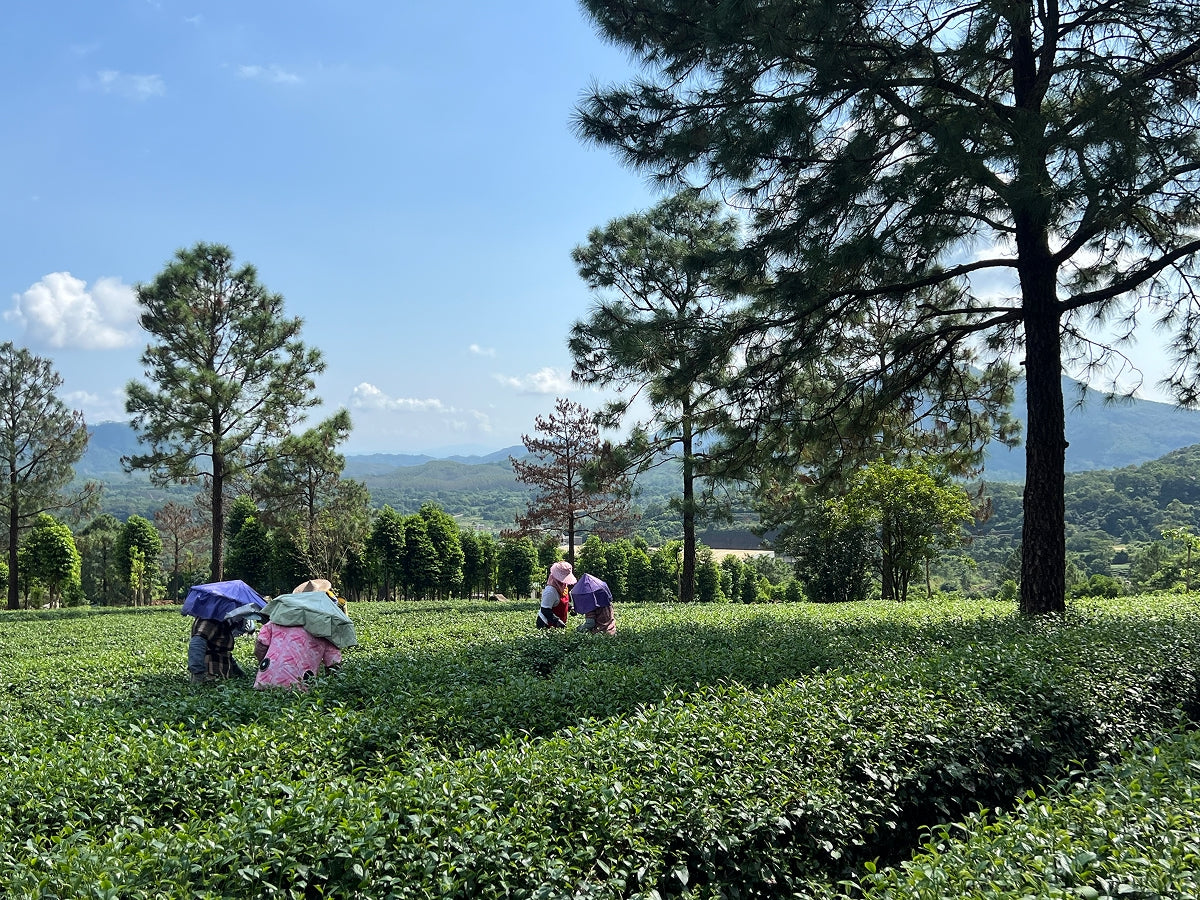
This 2020 compressed raw Pu-erh tea cake comes from Wan Gong (Chinese: 弯弓, literally “Curved Bow”), a region widely regarded as the spiritual heart of Yiwu. Within Yunnan’s Yiwu tea-producing area, Wan Gong remains one of the most legendary and respected tea regions — a tea mountain shaped by fire, abandonment, and rediscovery.
Historical Background of Wan Gong
The Ancient Tea Horse Road Era
During the Tang Dynasty (7th–9th century CE), tea from Yunnan began traveling toward Tibet, gradually forming what would later become the Ancient Tea Horse Road, a trade route that continued for more than 1,300 years. Along both sides of the Wan Gong River, at elevations between 1,400 and 1,800 meters, stood several ancient villages historically known as Qianjiazhai. At its peak, the area was home to more than four hundred households and thousands of residents, serving as a major transportation and tea distribution center along the Tea Horse Road.
Ancient Man Sa Tea Mountain
According to historical records, this region was once known as the Ancient Man Sa Tea Mountain. Ancient tea trees over one hundred years old still grow throughout the mountains, including tea tree kings believed to be nearly a thousand years old. This area was not only one of the core sourcing regions for imperial tribute tea, but also one of the birthplaces of high-grade ancient Pu-erh tea.
Destruction and Disappearance
Yet history was not kind to Wan Gong. Between the Tongzhi and Guangxu eras of the Qing Dynasty (1862–1908), three devastating fires swept through the region. The flourishing villages were destroyed, and countless ancient Pu-erh tea trees were lost to the flames. What had once been a thriving mountain settlement gradually disappeared into the wilderness, hidden deep within the forests and forgotten for nearly a century.
The Ecological Environment of Wan Gong
Ironically, this century-long isolation became Wan Gong Pu-erh tea’s greatest fortune. The surviving tea gardens and ancient trees were left entirely untouched by human activity.
Hidden deep within pristine forests, they coexisted naturally alongside towering old-growth trees, ferns, and mosses, forming a remarkably pristine forest ecosystem. Nourished by high-altitude mist, abundant rainfall, and deep humus-rich forest soil, the resulting tea developed exceptional purity and depth.
Key Ecological Characteristics
- High-altitude tea-growing environment (1,400–1,700 meters)
- Dense old-growth forest ecosystem
- Rich humus-rich mountain soil
- Long-term natural coexistence with native vegetation
- Minimal human intervention over nearly a century
The Rediscovery of Wan Gong Pu-erh Tea
It was not until the early 21st century, as raw Pu-erh tea became increasingly popular for daily drinking and demand for ancient tree material continued to rise, that Wan Gong gradually returned to public attention.
Tea farmers, represented by the Yao communities of Dingjiazhai, once again journeyed back into the ancestral forests. Under the protection framework of China’s national forest conservation policies, they resumed careful management and seasonal harvesting, allowing Wan Gong Pu-erh tea to reemerge after nearly a century of silence.
Even today, Wan Gong tea gardens remain far removed from villages and roads. Every harvest requires tea farmers to cross steep and difficult mountain terrain. This hardship and rarity form the foundation of Wan Gong Pu-erh tea’s reputation as one of Yunnan’s celebrated “Famous Mountains and Famous Villages.”
Why This 2020 Wan Gong Tea Cake Offers Strong Value
At the same time, the dramatic reduction of century-old ancient tea trees, combined with Wan Gong’s prestigious reputation, has caused prices to rise significantly over the years.
The reason our 2020 Wan Gong Raw Pu-erh Tea Cake can still be offered at a highly competitive price is twofold:
Direct Sourcing Relationships
- Long-term direct partnerships between Chinese Tea Group and local tea farmers
- Fewer intermediary markups throughout the supply chain
Tea Material Composition
- Spring-harvest raw material
- Blend of tea trees approximately 50–100 years old
- Not produced entirely from century-old ancient trees
Sensory Profile
Dry Leaves
The tea cake displays thick, tightly twisted leaves with a bold structure, visible silver buds, and relatively intact leaf material. After several years of natural aging, the dry leaves have already begun developing early aged characteristics, though the overall appearance still retains a lively deep green tone. The compression level is moderate — firm enough to preserve the integrity and long-term aging potential of the cake, yet loose enough to allow easier separation without excessive force.
When examined closely, the dry leaves release gentle notes of honey, delicate floral aromatics, and a subtle wild forest character reminiscent of mountain woods.
Tea Liquor
The liquor presents a bright golden-yellow color, clear and transparent with a noticeable oily texture. As brewing progresses through multiple infusions, the color gradually deepens into apricot yellow or orange-gold tones. As the tea continues to age, the liquor is expected to transform toward deeper amber-red and chestnut-red hues, becoming increasingly rich and luminous.
Aroma
Rather than presenting itself aggressively in the cup, the aroma is seamlessly integrated into the liquor itself. Each sip carries elegant floral honey notes alongside subtle fruit characteristics — one of the defining traits that distinguishes Wan Gong tea from many other Yiwu teas.
Taste
Wan Gong raw Pu-erh tea is known for its remarkably light astringency, usually appearing gently on the tongue or upper palate, while bitterness remains minimal and dissipates quickly within only a few seconds. These qualities form the foundation of the tea’s returning sweetness, mouth-watering sensation, and lingering sweetness.
After swallowing, a subtle cooling sensation gradually spreads through the throat, creating a refreshing and layered aftertaste. In teas made entirely from century-old ancient trees, this cooling sensation tends to be even deeper and more pronounced.
Overall Character
Warm yet powerful — this defines the overall character of this 2020 Wan Gong Raw Pu-erh Tea Cake. Its distinctive wilderness character allows tea drinkers to sense humid woody notes and moss-like aromas reminiscent of a tropical rainforest, evoking the feeling of standing deep within an untouched ancient forest.
This tea belongs to our raw Pu-erh and Pu-erh tea collections.
At a highly competitive price, this tea offers a valuable opportunity to experience the essence of high-end Pu-erh, making it a sincere choice for those entering the world of famous Yiwu mountain teas.
Not sure if this tea suits your taste? Try a sample and follow our brewing guide.