

2020 Menghai Ripe Pu-erh Tea Cake


2020 Menghai Ripe Pu-erh Tea Cake
Yunnan Pu-erh (Pu’er)
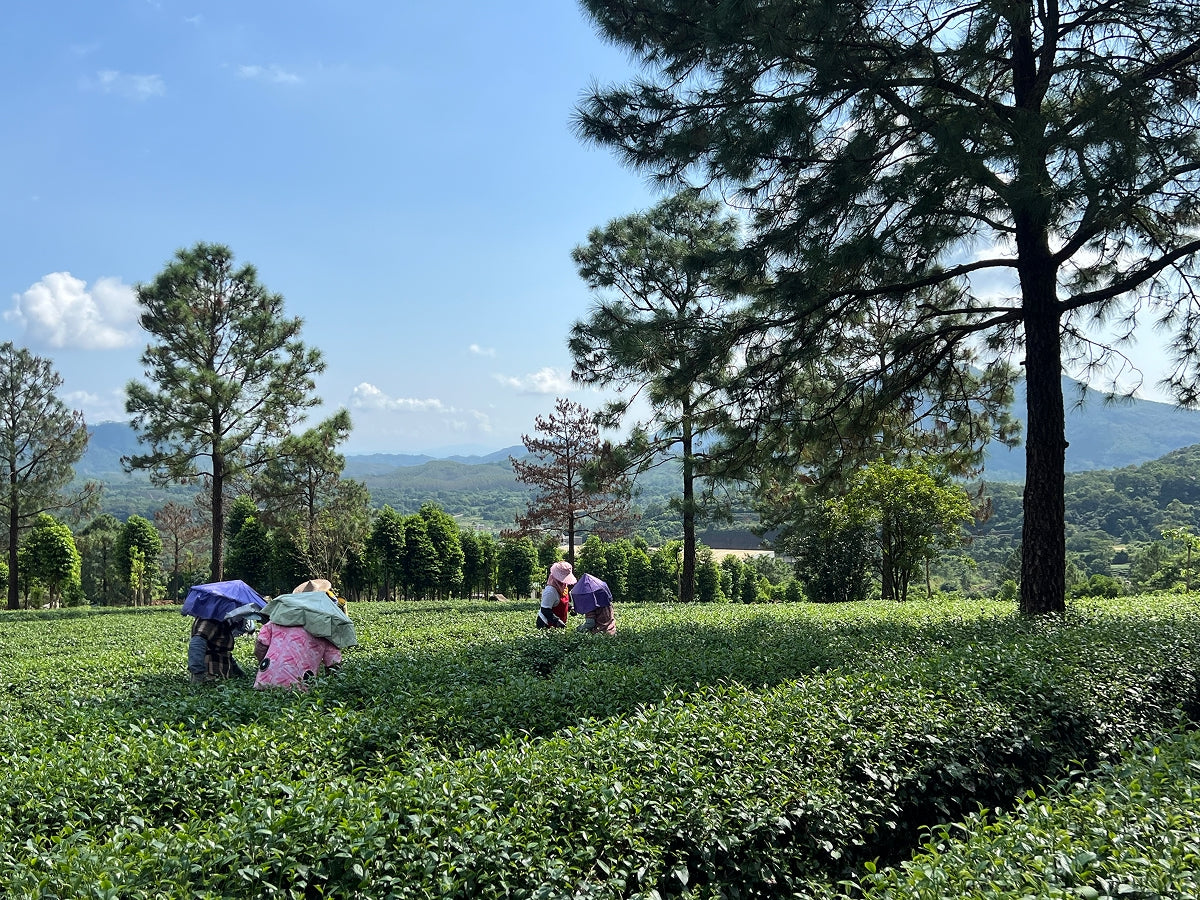
This 2020 Ripe Pu-erh Tea Cake (also known as Shou Pu'er) was produced in Menghai County, Yunnan Province, one of the most renowned Pu-erh tea regions in China. It is a compressed dark tea made from large-leaf arbor tea trees (approximately 50–80 years old). It has naturally aged for about six years.
Due to its deep red liquor, ripe Pu-erh tea is often mistaken for black tea. However, according to the Chinese tea classification system, it belongs to the category known as dark tea (Hei Cha).
Is Pu-erh Tea a Dark Tea?
Questions From Tea Lovers
Our tea masters are frequently asked in tea houses and tea shops about the relationship between Pu-erh tea and dark tea.
Historical Context
Before the development of modern pile-fermentation techniques in the 1970s, Pu-erh tea was produced only in what is now known as the raw (Sheng) style, and the idea of ripe (Shou) fermentation did not yet exist.
Pile-Fermentation Process
The invention of the pile-fermentation (wo dui) process led to the creation of ripe (Shou) Pu-erh tea. Since microbial fermentation is the key step in its production, ripe Pu-erh meets the classification criteria of Chinese dark tea (Hei Cha).
Summary
In simple terms:
- Traditional raw (Sheng) Pu-erh tea is not dark tea.
- Modern ripe (Shou) Pu-erh tea belongs to the dark tea category.
More accurately, it is not “Pu-erh tea = dark tea,” but specifically “ripe Pu-erh tea = dark tea.
Is Pu-erh Tea Black Tea?
Color Similarities
Although ripe Pu-erh tea (or well-aged raw Pu-erh tea) can produce a liquor similar in color to black tea, the two are produced using very different processes and fermentation techniques.
Historical Inspiration
Interestingly, the development of ripe Pu-erh tea was inspired by what was historically called “red-liquor Pu-erh,” a term used to describe the reddish color of the tea liquor.
In Chinese tea classification, this “red” does not refer to a separate tea category, and in international terminology, Chinese red tea is generally known as black tea.
Natural Fermentation Example
Around a century ago, Yunnan sun-dried large-leaf tea was transported over long distances to Guangdong, Hong Kong, and other southern markets. During transportation, changes in temperature and humidity caused the tea to undergo gradual natural fermentation. By the time it arrived, the liquor had turned from the bright golden color typical of Yunnan to a deeper red, while the flavor became smoother and more mellow.
This naturally transformed tea was highly appreciated by tea drinkers in southern China at the time. Inspired by this phenomenon, producers developed the pile-fermentation process to recreate the qualities of aged “red-liquor” Pu-erh in a much shorter time.
Conclusion
Therefore, calling Pu-erh tea black tea is not technically correct, but its liquor does resemble black tea in appearance, which explains why some people associate Pu-erh with black tea.
About This Tea
Based on this background, we help international tea drinkers better understand and choose the Pu-erh tea that best suits them.
This 2020 Menghai Ripe Pu-erh Tea Cake (Shou) represents a classic example of modern fermented Pu-erh tea.
- It is made from mature large-leaf arbor tea.
- It has now reached an excellent drinking stage after about six years of natural aging.
- The compressed cake shows uniform signs of aging around the center.
- The broad leaves and well-balanced leaf-to-stem ratio clearly reflect the characteristics of Yunnan’s large-leaf arbor tea.
Tasting Notes
Body
Rich and full-bodied, with a substantial texture that gently coats the palate. The inherent quality of the large-leaf arbor tea has fully developed after six years of aging.
Smoothness
Exceptionally smooth and mellow, with no noticeable bitterness or astringency. The liquor flows seamlessly from the first sip to the finish.
Sweetness
A pleasant sweetness emerges quickly and lingers in the throat. Six years of aging have greatly softened any youthful bitterness and enhanced the natural sweetness.
Complexity
Layers of mellow sweetness, subtle woody notes, and evolving aged character gradually unfold throughout the session. The tea remains flavorful across multiple infusions.
Overall Character
The tea offers a comforting and satisfying drinking experience, suitable for daily enjoyment or relaxed tea sessions.
Drinking & Aging
After about six years of natural aging, this large-leaf arbor ripe Pu-erh tea has fully lost its initial pile-fermentation aroma and entered a stable drinking stage. The liquor is deep red and bright, rich and smooth in texture, with a harmonious balance of sweetness and aged character, showcasing the early stages of the “improving with age” quality typical of well-crafted ripe Pu-erh tea.
Recommended For
If you are looking for a Pu-erh tea that has liquor similar in color to black tea and belongs to the traditional Chinese dark tea category, this 2020 Menghai Ripe Pu-erh Tea Cake (Shou) is an excellent choice.
It combines the black tea-like deep red appearance with the characteristic aged aroma and rich, mellow flavor of dark tea.
This tea is perfect for daily drinking, yet can also be stored further to develop even greater depth and complexity over time.

Gongfu Tea Brewing Guide
(Traditional Method)
Always rinse tea before the first infusion. For compressed teas, adjust the rinsing time according to the compression level, allowing the leaves to gently loosen before the first infusion.
| Water Temperature | 100°C (212°F) |
| Tea-to-Water Ratio | 8g tea per 150ml water |
| Steeping Time | |
| Brews 1–5 | Steep for 5–12 sec |
| Brews 6–8 | Steep for 9–25 sec |
| Brews 9–13 | Steep for 26–35 sec |
Tips: Tea masters recommend steeping times based on each tea's unique flavor, starting the timer after pouring the water.
Common Brewing Guide
(Easy Everyday Preparation)
| Water Temperature | 100°C (212°F) |
| Leaf-to-Water Ratio | 2g per 100ml |
| Steeping Time | About 1–2 minutes |
| Subsequent Infusions | Increase by 30 seconds each time |
Tips: You can adjust the steeping time or leaf-to-water ratio to suit your taste—shorten the infusion for a lighter brew or extend it for a stronger one.