

2019 Xi Niu Tang Ancient Tree Raw Pu-erh Tea Cake


2019 Xi Niu Tang Ancient Tree Raw Pu-erh Tea Cake
Yunnan Pu-erh (Pu’er)
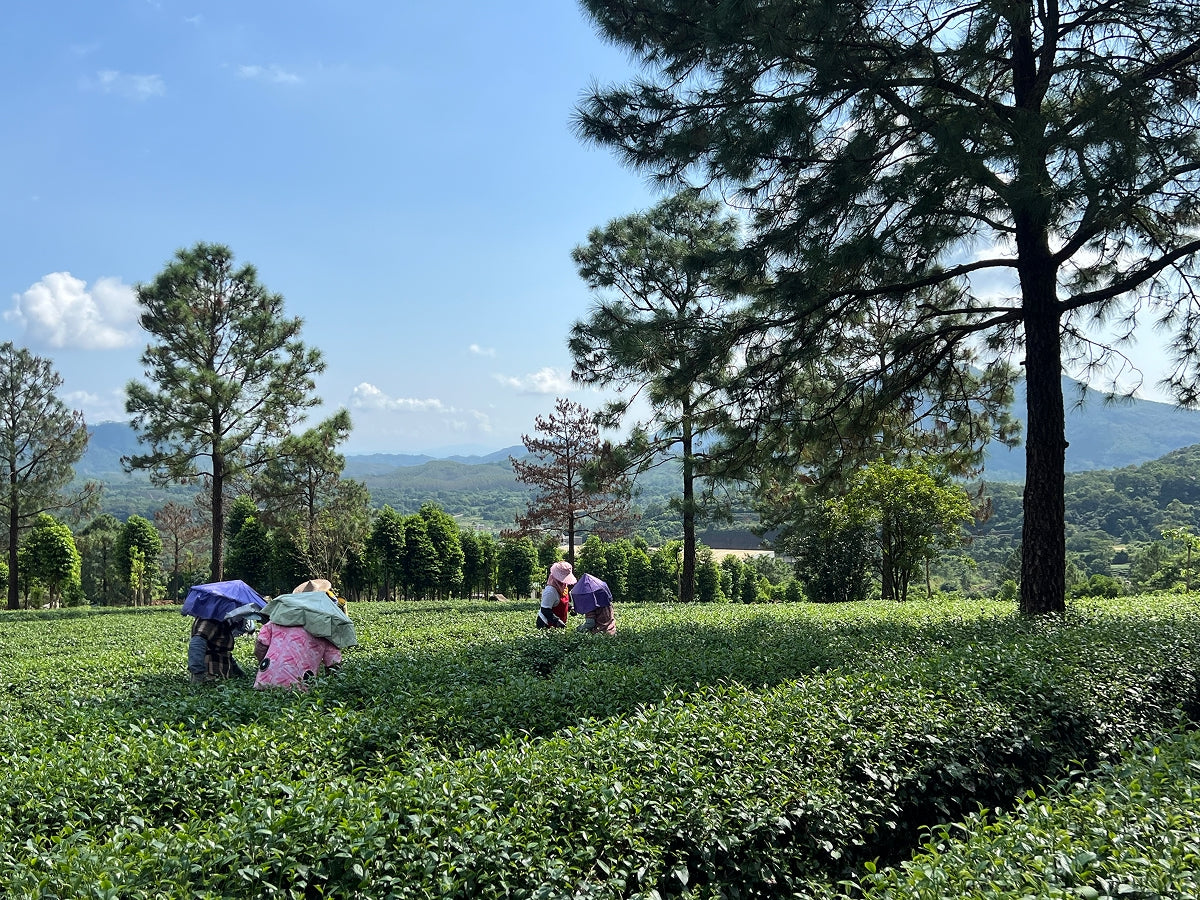
Unlike many Pu-erh teas (also spelled Pu'er) named after villages, this 2019 Xi Niu Tang Ancient Tree Raw Pu-erh Tea Cake takes its name not from a village, but from a distinct ancient tea tree growing region within the Pasha tea area of Menghai County, Xishuangbanna, Yunnan Province.
In the local language, “Pasha” refers to a high-altitude forest landscape, and Xi Niu Tang is located among the highest elevations of this region.
According to local legend, when the Hani people first migrated here, wild rhinoceroses were often seen playing in the mountain ponds, which gave rise to the name “Xi Niu Tang,” meaning “Rhinoceros Pond.”
Ancient Forest & Tea Heritage
Even older than the Hani settlements in this region are the ancient tea trees that continue to thrive in these forests.
Some of these trees are believed to date back to the Tang Dynasty (618–907 AD), or even earlier, originally cultivated and preserved over centuries by the ancient Pu people, one of Yunnan’s earliest known ethnic groups.
The Pasha Mountain Landscape
The Xi Niu Tang area sits within a naturally enclosed mountain system:
- Facing Nannuo Mountain
- Backed by Bulang Mountain
- Surrounded by Hekai and Leida Mountain ranges
The region is characterized by:
- Year-round mountain mist
- Fertile dark forest soil
- Dense, well-preserved vegetation
- Ancient tea trees growing within natural forest ecosystems
Within the broader Pasha tea region, Xi Niu Tang is especially known for its tall ancient tea trees and strong ecological integrity, and is regarded as one of the core terroir expressions of the Pasha tea region.
A Rare and Respected Origin
Xi Niu Tang Pu-erh tea is not widely known among casual tea drinkers due to its:
- Limited natural range
- Naturally low annual production
However, among experienced Pu-erh tea drinkers, it has long been regarded as a highly collectible origin with strong character and aging potential.
Its style is often summarized as:
“Seven parts Ban Zhang strength, three parts Bing Dao sweetness, and full Pasha fragrance.”
Our Connection with Xi Niu Tang
In 2015, while exploring high-end ancient tree tea regions across Yunnan with strong aging potential, the tea masters of Chinese Tea Group first discovered Xi Niu Tang.
Since then, we have sourced carefully selected maocha from this region annually — sun-dried raw Pu-erh tea in its loose form before pressing — and pressed it into tea cakes for our Mingyue Series, focusing on high-quality ancient tree material.
2019 Harvest
This Xi Niu Tang Ancient Tree Raw Pu-erh Tea Cake was produced from the spring 2019 harvest, using ancient tea trees with an average age of approximately 300–600 years.
After more than five years of natural aging, it has gradually entered an excellent drinking stage and has been released in limited quantities since 2024.
Tea Character
Appearance
(Photographed in our tea house)
The dry tea cake displays a tight, traditional stone-pressed structure with naturally twisted strips.
The leaves are thick and substantial, well-structured and tightly compressed, with clearly formed ancient tree leaf patterns.
With age, the surface has developed a deep, dark, and slightly oily sheen.
The buds are covered in fine silver-white hairs, which reflect light with a soft silver-gray glow — creating a visual contrast reminiscent of black satin dusted with silver frost.
Aroma
The dry leaves release a clean and expressive aroma:
- Wild mountain honey
- Light floral notes
- A gentle sugarcane-like sweetness
The aroma is pure, high-toned, and free from any heaviness or storage notes.
Taste & Structure
With its signature “seven parts Ban Zhang strength,” this tea opens on the palate with a clear sense of structure and presence, delivering strength and definition from the very first impression. It transitions smoothly from gentle bitterness into returning sweetness, while the texture remains full and layered, yet precise and refined. Rather than heaviness, it feels structured, clean, and energetic.
Aroma in the Cup
Expressing the “full Pasha fragrance,” the aroma of Xi Niu Tang is not only present in the dry leaf and cup, but also carries through the liquor itself. Even the infused leaves release a rich floral fragrance. After swallowing, floral notes gently return through the palate, creating a long and lingering aromatic finish.
Sweetness Development
With its characteristic “three parts Bing Dao sweetness,” this raw Pu-erh tea evolves gradually over multiple infusions. Early infusions emphasize structure and strength, while sweetness begins to emerge and build as the tea opens. From around the fifth infusion onward, the sweetness becomes more pronounced, accompanied by a soft cooling sensation in the throat.
The sweetness presents itself as:
- Clean and refined
- Similar to rock sugar
- Long-lasting and stable
- Present even after 15+ infusions
Mouthfeel & Body Sensation
The tea leaves a cooling sensation in the mouth and throat, while a gentle warmth gradually spreads through the body.
This contrast creates a layered and dynamic drinking experience, balancing freshness with internal warmth.
Overall Impression
This 2019 Xi Niu Tang Ancient Tree Raw Pu-erh Tea Cake represents a balance of:
- High-mountain ecological expression
- Ancient tree structure and depth
- Layered floral fragrance
- Long-term aging potential
After several years of natural aging, it has entered an excellent drinking window while still retaining strong future evolution potential.
For tea drinkers seeking a high-end ancient tree Pu-erh with clarity, structure, and terroir depth, it stands as a highly representative expression of the Pasha tea region.
Not sure if this tea suits your taste? Try a sample and follow our brewing guide.