

2020 Yiwu Mahei Roher Pu-erh Teekuchen


2020 Yiwu Mahei Roher Pu-erh Teekuchen
Yunnan Pu-Erh (Pu'er)
Dieser 2020 rohe (Sheng) Pu-Erh-Teekuchen stammt aus der Tee-Region Yiwu, einer der angesehensten Ursprungsorte für Pu-Erh-Tee und weithin bekannt für sein außergewöhnliches Alterungspotenzial und seinen klassischen Charakter, der oft als „je älter er wird, desto duftender wird er“ beschrieben wird. Der Tee wurde ausschließlich aus Mahei bezogen, einem der repräsentativsten Kerndörfer von Yiwu. Er ist ein echter Tee mit einer einzigen Herkunft und bietet den reinen Ausdruck des Dorfes Mahei in Yiwu.
Historische Bedeutung von Yiwu Pu-Erh
In den letzten zwei Jahrzehnten enthielten viele jahrhundertealte Pu-Erh-Tees, die bei internationalen Auktionen für Hunderttausende – und manchmal Millionen – von Dollar verkauft wurden, Material aus Yiwu. Sein Einfluss zieht sich tief durch die moderne Geschichte des Pu-Erh-Tees.
Über den Teemeister
Ich bin Wang Kai, ein nationaler erstklassiger Teemeister der Chinese Tea Group. Persönlicher Geschmack und Vorlieben variieren natürlich von Person zu Person, aber unser Ziel ist einfach: den Tee ehrlich zu erklären und den Menschen zu helfen, zu verstehen, woher er wirklich kommt.
Herkunft & Terroir von Pu-Erh-Tee
Yunnan ist der authentische Geburtsort des Pu-Erh-Tees, mit Teeanbaugebieten, die sich über eine außergewöhnlich weite Landschaft erstrecken. Die gesamte Teeverbreitungsfläche in Yunnan erreicht ungefähr 530.000 Hektar (1.309.700 Acres) und umfasst sowohl wildwachsende als auch kultivierte Teepflanzen. Allein innerhalb der geschützten geografischen Angabe umfassen Teegärten etwa 400.000 Hektar (988.400 Acres). Pu-Erh-Tee-Ursprünge werden traditionell von weiten Regionen wie Xishuangbanna, Lincang und Pu’er bis hin zu berühmten Tegebergen, einzelnen Berggebieten und schließlich spezifischen Dörfern kategorisiert.
Regionale Hierarchie
Jedes Dorf entwickelt seinen eigenen Charakter durch Unterschiede in:
- Boden
- Höhe
- Ökologie
- Mikroklima
- Feine Abweichungen bei der Teeverarbeitung
Sogar der Abstand zwischen dem Teegarten und dem anfänglichen Welkbereich nach der Ernte kann kleine, aber bedeutsame Unterschiede im Endgeschmack erzeugen.
Yiwu Tee-Region & Mahei Dorf
Yiwu, im Mengla-Kreis innerhalb der Xishuangbanna-Tee-Region gelegen, ist einer der historisch bedeutsamsten Pu-Erh-Berge und wird traditionell mit den bekannten „Sieben Dörfern und Acht Weilern“ assoziiert. Das Dorf Mahei gilt weithin als einer der Maßstäbe für den Alterungscharakter des Yiwu Pu-Erh-Tees.
Mahei Terroir-Merkmale
Mahei liegt auf einer Höhe von etwa 1.200–1.500 Metern.
Wichtige Umweltmerkmale:
- Saure rote und rot-gelbe Böden
- Feine sandige Textur
- Reicher Mineralgehalt
- Waldbedeckung von über 80 %
Waldökosystem
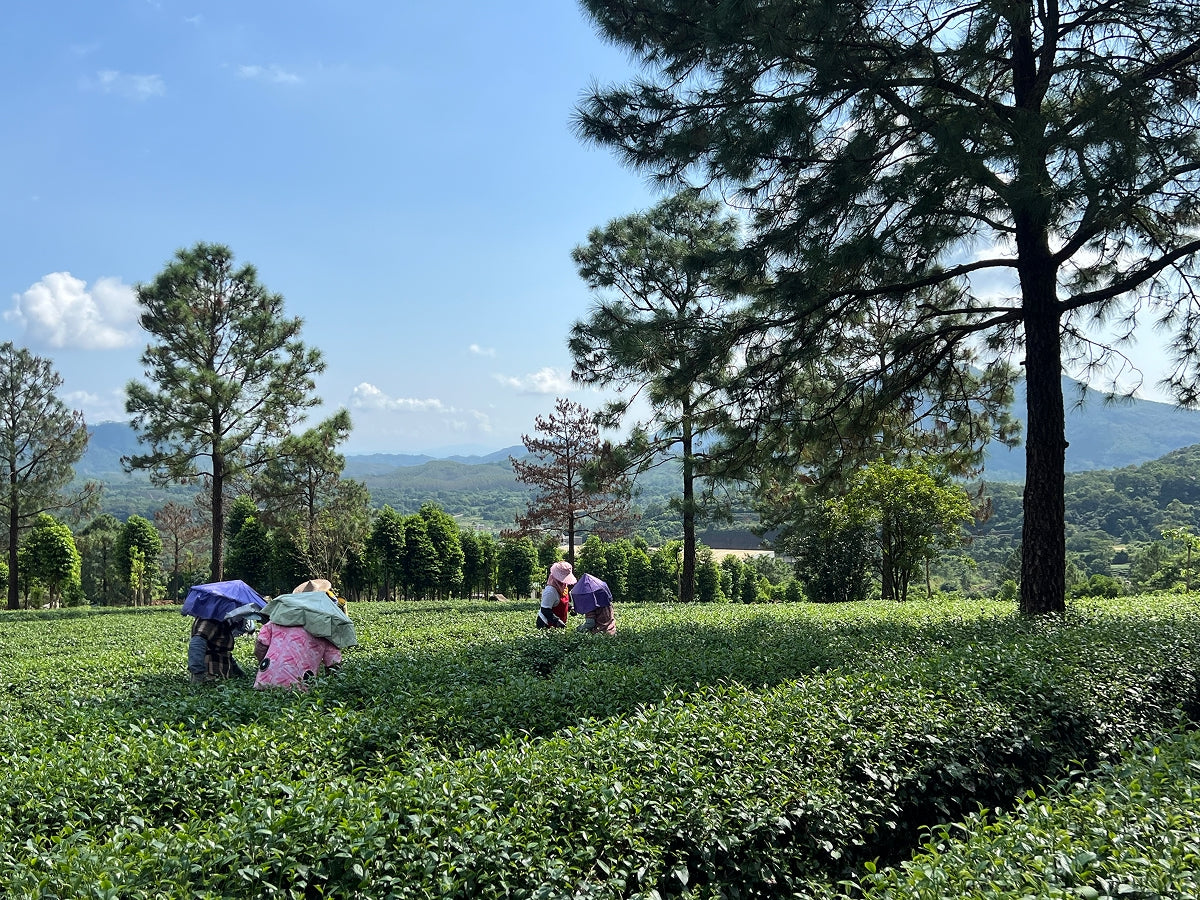
Viele alte Teebäume wachsen natürlich neben:
- Kampfer
- Banyan
- Eiche
- Anderen großen heimischen Bäumen
Dies bildet ein einzigartiges mikroklimatisches Waldökosystem, das in unserer Branche als „im Wald gewachsener Tee“ bekannt ist.
Umfang der alten Teegärten & Baumalter
Die alten Teegärten von Mahei umfassen etwa 160–333 Hektar (395–823 Acres). Die Hauptteesorte ist großblättriger Baumbestand, wobei die meisten Bäume zwischen 100 und 300 Jahre alt sind, einige sogar über 400 Jahre.
Historischer Anbaueinfluss
In den 1980er und 1990er Jahren wurden jedoch, um die Produktion zu steigern, einige alte Teebäume stark beschnitten und in ihrer Wuchsform reduziert, indem Teile des Wurzelsystems abgeschnitten wurden. Obwohl diese Eingriffe vor über dreißig Jahren eingestellt wurden, können sich die betroffenen Bäume die tiefe Wurzelabsorptionskapazität unberührter alter Teebäume nicht mehr vollständig zurückholen. Infolgedessen kann die natürliche Anreicherung von Verbindungen wie Polyphenolen, Aminosäuren und Glykosiden nicht vollständig mit der von völlig unveränderten alten Teebäumen mithalten.
Produktpositionierung
Unser 2020 Yiwu Mahei Roher Pu-Erh Teekuchen wird aus den Blättern dieser zuvor bewirtschafteten alten Teebäume hergestellt. Aus diesem Grund haben wir uns bewusst dafür entschieden, diesen Tee weder auf der Verpackung noch im Produkttitel als „Alter Teebaum Tee“ zu kennzeichnen. Dennoch sind sein Gesamtcharakter und sein Geschmackserlebnis deutlich höher als die von gewöhnlichen Teebäumen, die nur einige Jahrzehnte alt oder jünger sind.
Aroma & Eigenschaften der trockenen Blätter
Auf unseren unbearbeiteten Produktbildern können Sie das Aussehen des Teekuchens und die dicken, fest gepressten trockenen Blätter darin sehen. Die trockenen Blätter verströmen eine gleichmäßige Honigsüße, begleitet von einer zarten orchideenartigen blumigen Note.
Geschmack & Mundgefühl
Nach mehreren Jahren natürlicher Reifung hat der Tee eine glatte und raffinierte Textur entwickelt.
Der Aufguss fühlt sich an:
- Weich
- Vielschichtig
- Vollmundig
- Sehr gering an Bitterkeit
Ein klassischer Yiwu-Charakter, oft beschrieben als „weich und doch vollmundig“, sanft in der Textur, während er reichhaltig und vielschichtig am Gaumen ist.
Geschmacksstruktur
Süße ist eine seiner markantesten Eigenschaften:
- Klare natürliche Süße beim ersten Schluck
- Schnelle und langanhaltende wiederkehrende Süße
- Kühlendes Gefühl im Hals
Bitterkeit und Adstringenz bleiben relativ leicht:
- Leichte Bitterkeit erscheint kurz, verflüchtigt sich aber schnell
- Adstringenz bleibt weich und zurückhaltend
Der Aufguss offenbart auch:
- Honigsüße
- Blumige Nektarnoten
- Subtile Fruchtnuancen
- Vollmundige Textur
Zubereitungsleistung
Bei normaler Gongfu-Zubereitung kann der Tee problemlos 12–18 Aufgüsse aushalten und behält auch in den späteren Aufgüssen seine Süße.
Blatt nach dem Aufguss
Die aufgegossenen Blätter bleiben nach dem Aufguss bemerkenswert zart und geschmeidig, was die sorgfältige Auswahl der zarten im Frühling gepflückten Blätter widerspiegelt.
Marktkontext & Wertverständnis
Die Preise für Pu-Erh-Tee können selbst bei Tees, die unter demselben regionalen Namen verkauft werden, enorm variieren. Über Unterschiede in Herkunft, Baumalter und Erntesaison hinaus muss auch berücksichtigt werden, ob der Tee sortenrein ist oder gemischt, welche Anteile in der Mischung enthalten sind oder ob der Name lediglich als kommerzielles Etikett verwendet wird, das nichts mit der wahren Herkunft des Materials zu tun hat.
Traditionelles Pu-Erh-Sprichwort
In der Pu-Erh-Tee-Welt gibt es ein Sprichwort:
„Wer Yiwu noch nie probiert hat, hat Pu-Erh-Tee nie wirklich verstanden.
Aber wer Mahei nicht versteht, versteht Yiwu nicht wirklich.“
Endgültige Positionierung
Dieser 2020 Yiwu Mahei Roher Pu-Erh Teekuchen ist eine sortenreine Produktion mit exzellentem Alterungspotenzial. Er ist heute schon genießbar, belohnt aber auch eine langfristige Lagerung mit reicheren, komplexeren Geschmacksschichten im Laufe der Zeit.
Wenn Sie einen Pu-Erh-Tee suchen, der Sie durch die Jahre begleitet und dessen sich entwickelnden Charakter mit jeder Saison erleben lässt, dann ist Yiwu Mahei eine Überlegung wert.
Sie sind sich nicht sicher, ob dieser Tee Ihrem Geschmack entspricht? Probieren Sie eine Probe und folgen Sie unserem Zubereitungsleitfaden.