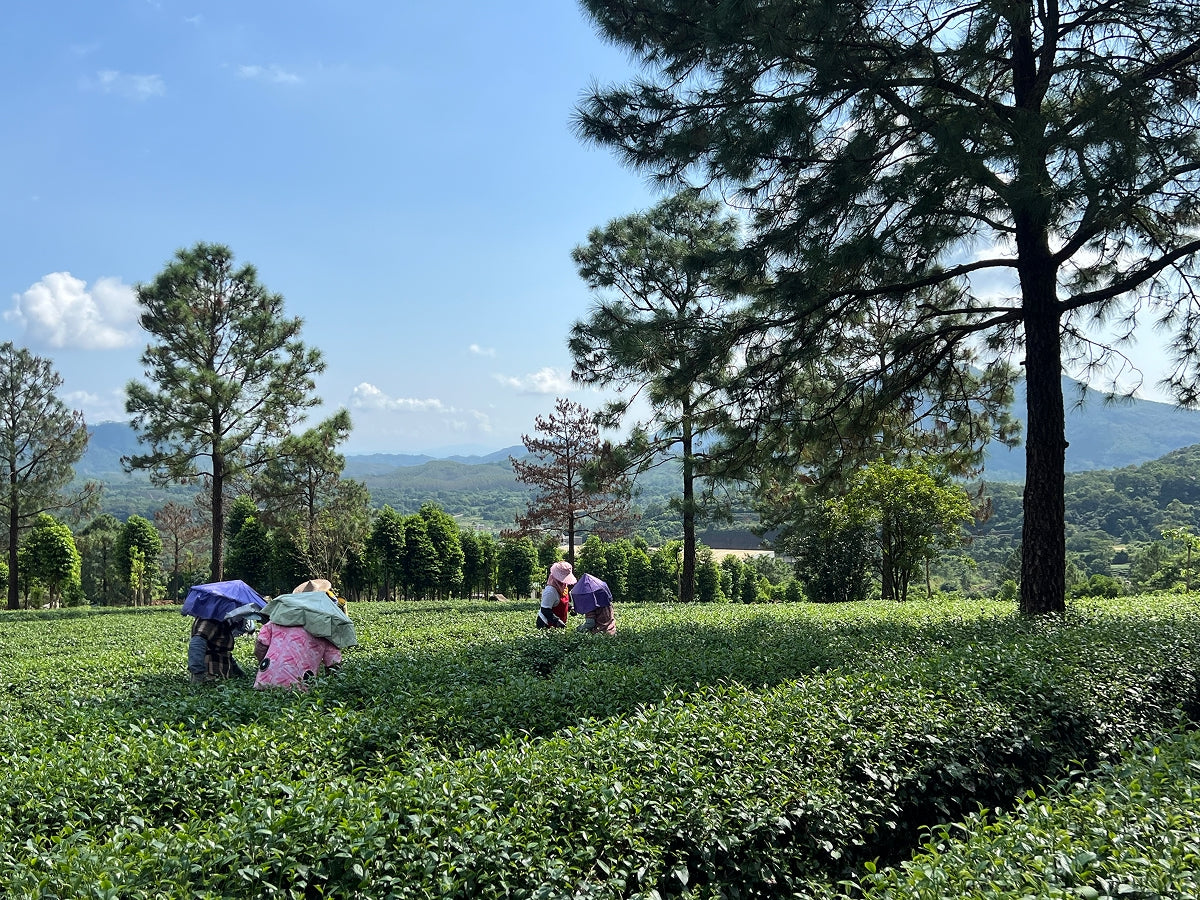


2022 Ban Pen Antiker Baum Roher Pu-erh Teekuchen


2022 Ban Pen Antiker Baum Roher Pu-erh Teekuchen
Yunnan Pu-erh (Pu’er)
Hergestellt im alten Dorf Banpen, umgeben von berühmten Teeanbaugebieten, ist dieser 2022 Ban Pen Ancient Tree Raw Pu-erh Teekuchen ein erlesener, historisch reicher und preiswerter Pu-erh Tee aus einer einzigen Mikroregion, der sich durch seine Höhenlage und seinen Ursprung von alten Bäumen auszeichnet.
Altes Dorf Banpen und seine geografische Lage
Das alte Dorf Banpen liegt an der Kreuzung der berühmten Bulang-Berge und Hekai-Berge im Kreis Menghai, Xishuangbanna, Yunnan. Es ist ein Teedorf, das lange Zeit von seinen weltklasse Pu-erh-Tee-Regionen in der Nachbarschaft überschattet wurde.
Im Westen grenzt es an die Dörfer Lao Ban Zhang und Xin Ban Zhang, während im Osten Lahu-Siedlungen wie Manmai und Mannong am alten Teeberg Hekai liegen.
Antikes Tee-Erbe und Bulang-Teekultur
Das alte Dorf Banpen, auf einer durchschnittlichen Höhe von 1.700 Metern (ca. 5.577 Fuß) gelegen, ist die Heimat der Bulang-Bevölkerung, einer der ältesten Teepflanzer-Ethnien Yunnans.
Teebäume nehmen einen heiligen Platz in ihrer Geschichte, Kultur und ihrem täglichen Leben ein. Generationen haben reiche Ressourcen an alten Teebäumen und traditionelle Teeproduktionsfähigkeiten geerbt.
Das Dorf verfügt über 2.000 Mu (ca. 133 Hektar / 330 Acres) alte Teegärten, mit Bäumen, die durchschnittlich 300–500 Jahre alt sind, und einige, die über 500 Jahre alt sind – wahrhaftig ein „lebendes Fossil“ für das Studium der Teekultur der ethnischen Minderheiten Yunnans.
Banpen Tee und Lao Ban Zhang: Ähnliche Ursprünge, unterschiedlicher Charakter
Obwohl administrativ unter dem Verwaltungsgebiet des Hekai-Gebirges (Dorfkomitee Hekai) gelegen, ist das alte Dorf Banpen nur etwa 3 Kilometer (ca. 1,86 Meilen) Luftlinie vom Dorf Lao Ban Zhang in der Gemeinde Bulangshan entfernt.
Folglich teilt Banpen-Tee fast die gleiche Höhe und das gleiche Klima wie Lao Ban Zhang-Tee, doch haben die beiden Regionen sehr unterschiedliche Ruf- und Geschmacksprofile entwickelt.
Die Unterschiede ergeben sich aus subtilen Variationen im Terroir und den Teebaumarten.
Bodenbeschaffenheit und Terroir-Unterschiede
- Der Boden von Lao Ban Zhang besteht hauptsächlich aus gelbem und gelbbraunem Erdreich, das durch die Verwitterung von Schiefer entstanden ist und reich an organischen Stoffen sowie Spurenelementen wie Mangan, Zink und Eisen ist. Dieser charakteristische Boden trägt vermutlich zum markanten, kräftigen Charakter von Lao Ban Zhang bei – starke Bitterkeit, intensives Tee-Qi und ein schneller, süßer Nachgeschmack.
- Der Boden von Banpen ist ähnlich fruchtbar, enthält aber mehr Kies und sandiges Material, was eine verbesserte Drainage ermöglicht. Diese Struktur fördert das tiefere Wurzelwachstum der Teebäume auf der Suche nach Wasser und Nährstoffen, was die Anreicherung bestimmter Geschmacksverbindungen unterstützen kann. Im Vergleich zu Lao Ban Zhang weist Banpen-Tee daher im Allgemeinen eine geringere Bitterkeit und eine ausgeprägtere Süße auf.
Baumalter und Teesorten
- Während Lao Ban Zhang sowohl alte als auch neuere Teebäume beherbergt, werden seine Kern-Teegärten von alten Bäumen im Alter von 200 bis 600 Jahren dominiert, die hauptsächlich zur Sorte „Lao Ban Zhang“ gehören, einem einzigartigen ökologischen Typ innerhalb der Menghai-Großblatt-Teefamilie.
- Die alten Teebäume von Banpen sind ebenfalls durchschnittlich 300–500 Jahre alt, wobei die Sorten vielfältiger sind. Neben Menghai-Großblatt-Teebäumen finden sich im gesamten Dorf auch andere lokale Yunnan-Großblatt-Varietäten.
Frühling 2022 Ernte von alten Bäumen
Dieser Teekuchen aus alten Teebäumen wurde aus frischen Frühlingsblättern des Jahres 2022 von Banpens alten Teebäumen hergestellt und zu rohem (Sheng) Pu-erh Tee verarbeitet.
Trockene Blätter und Verkostungsnotizen
Anhand der unbearbeiteten Produktfotos unseres Teehauses können Sie die Details deutlich erkennen.
Trockene Blätter
- Dicke und fest gedrehte Blattstreifen
- Robustes Aussehen, typisch für alte Großblatt-Teebäume
Ein genauerer Geruch offenbart zarte blumige Honignoten, begleitet von einem unverwechselbaren Bergduft.
Tee-Aufguss und Geschmack
- Klarer und heller Tee-Aufguss
- Ausgeprägt blumiger Duft nach dem Aufgießen
- Kräftige Struktur, die an Lao Ban Zhang erinnert
- Süße und Feinheit, charakteristisch für Hekai-Tees
- Geschmeidiges und raffiniertes Mundgefühl
- Langanhaltender Abgang mit einem befriedigenden Nachgeschmack
Beim Aufbrühen werden die blumigen Noten ausgeprägter und der Teeaufguss erscheint klar und hell. Der Geschmack vereint die kräftige Stärke, die mit Lao Ban Zhang assoziiert wird, und die Süße und Zartheit, die oft in Hekai-Tees zu finden ist. Der Teeaufguss hat ein geschmeidiges, raffiniertes Mundgefühl mit einem anhaltenden Abgang, der ein starkes Gefühl der Zufriedenheit hinterlässt.
Nasse Blätter/Blattbasis
Nach dem Aufbrühen sind die Blätter dick, weich und geschmeidig und zeigen klare Blattadern. Die zarten Frühlingsspitzen zeigen eine einzigartige Vitalität, die nur bei frisch gepflückten alten Teebäumen zu finden ist, was die Frische und Qualität der Ban Pen Ernte von 2022 widerspiegelt.
Alterungspotenzial – Sofort trinkfertig, würdig zur Lagerung
Pu-erh Tee ist traditionell bekannt für seine Fähigkeit, sich mit dem Alter zu entwickeln und zu verbessern.
Obwohl dieser 2022 Ban Pen Ancient Tree Raw Pu-erh Teekuchen noch als jung gilt, haben mehrere Jahre natürlicher Ruhe seine anfängliche Adstringenz und Bitterkeit bereits gemildert.
In diesem Stadium ist der Teeaufguss geschmeidig und abgerundet, mit einer angenehmen natürlichen Süße, was ihn ideal zum sofortigen Genuss macht.
Gleichzeitig bieten sein tiefgründiger Charakter alter Bäume und seine reiche innere Struktur ein starkes Alterungspotenzial. Bei richtiger Lagerung wird er mit der Zeit weiterhin an Komplexität und Tiefe gewinnen – und bietet heute sofortigen Genuss sowie eine lohnende Entwicklung in der Zukunft.
Sie sind sich nicht sicher, ob dieser Tee Ihrem Geschmack entspricht? Probieren Sie eine Probe und folgen Sie unserer Brüh-Anleitung.