

2020 Menghai gereifter Pu-erh Teekuchen


2020 Menghai gereifter Pu-erh Teekuchen
Yunnan Pu-erh (Pu'er)
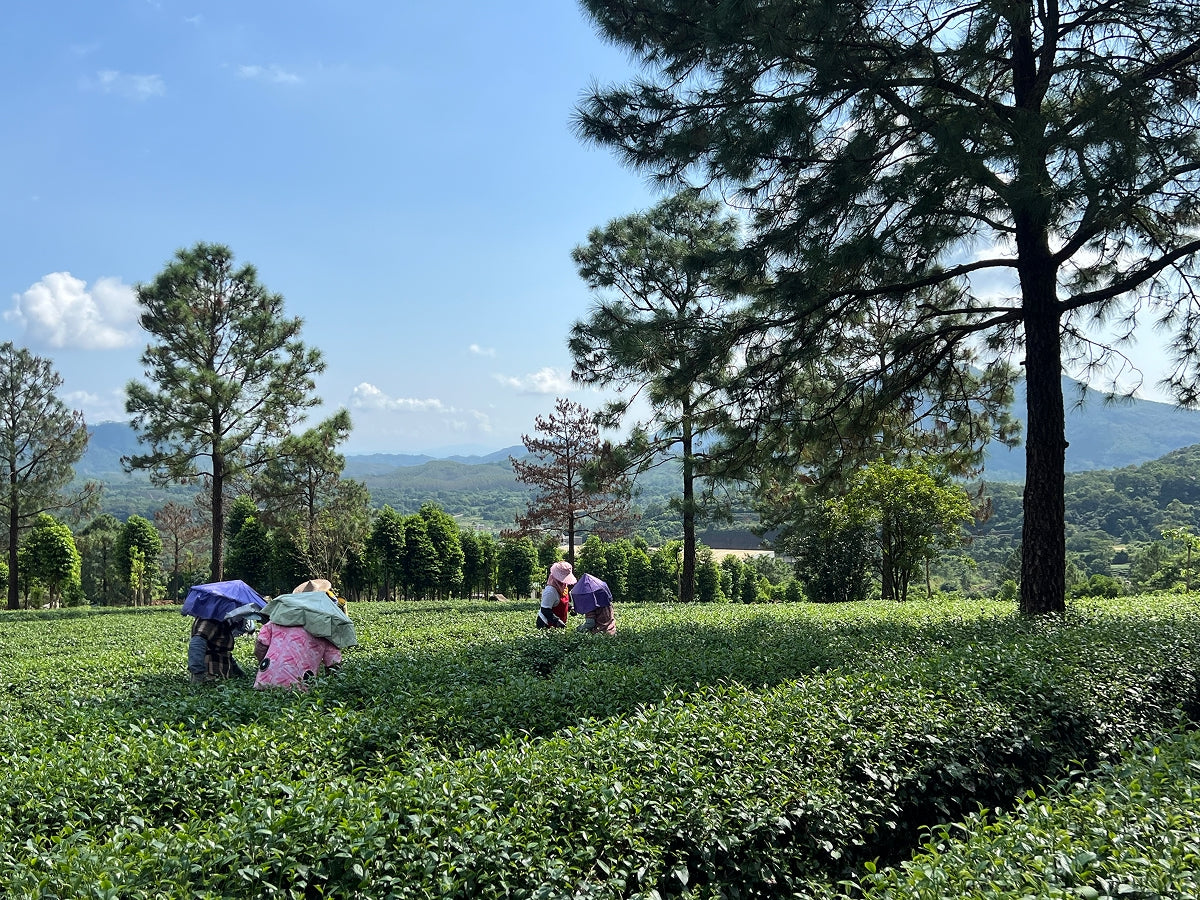
Dieser 2020er Ripe Pu-erh Tee-Kuchen (auch bekannt als Shou Pu'er) wurde im Kreis Menghai in der Provinz Yunnan produziert, einer der bekanntesten Pu-erh Tee-Regionen Chinas. Es ist ein gepresster dunkler Tee, hergestellt aus großblättrigen Baum-Teebäumen (ca. 50–80 Jahre alt). Er ist etwa sechs Jahre natürlich gealtert.
Aufgrund seiner tiefroten Farbe wird reifer Pu-erh Tee oft mit schwarzem Tee verwechselt. Nach dem chinesischen Tee-Klassifizierungssystem gehört er jedoch zur Kategorie der dunklen Tees (Hei Cha).
Ist Pu-erh Tee ein dunkler Tee?
Fragen von Teeliebhabern
Unsere Teemeister werden in Teehäusern und Teeläden häufig nach der Beziehung zwischen Pu-erh Tee und dunklem Tee gefragt.
Historischer Kontext
Vor der Entwicklung moderner Haufenfermentations-Techniken in den 1970er Jahren wurde Pu-erh Tee nur in der heute als Roh-Stil (Sheng) bekannten Form hergestellt, und die Idee der Reifungs-Fermentation (Shou) existierte noch nicht.
Haufenfermentationsprozess
Die Erfindung des Haufenfermentationsprozesses (wo dui) führte zur Schaffung des reifen (Shou) Pu-erh Tees. Da die mikrobielle Fermentation der entscheidende Schritt in seiner Produktion ist, erfüllt reifer Pu-erh die Klassifizierungskriterien des chinesischen dunklen Tees (Hei Cha).
Zusammenfassung
Einfach ausgedrückt:
- Traditioneller roher (Sheng) Pu-erh Tee ist kein dunkler Tee.
- Moderner reifer (Shou) Pu-erh Tee gehört zur Kategorie der dunklen Tees.
Genauer gesagt, es ist nicht „Pu-erh Tee = dunkler Tee“, sondern spezifisch „reifer Pu-erh Tee = dunkler Tee.
Ist Pu-erh Tee schwarzer Tee?
Farbähnlichkeiten
Obwohl reifer Pu-erh Tee (oder gut gealterter roher Pu-erh Tee) eine Farbe ähnlich dem schwarzen Tee aufweisen kann, werden die beiden mit sehr unterschiedlichen Prozessen und Fermentationstechniken hergestellt.
Historische Inspiration
Interessanterweise wurde die Entwicklung des reifen Pu-erh Tees durch den historisch sogenannten „Rotlikör-Pu-erh“ inspiriert, ein Begriff, der die rötliche Farbe des Teegetränks beschrieb.
In der chinesischen Teeklassifikation bezieht sich dieses „Rot“ nicht auf eine separate Teekategorie, und in der internationalen Terminologie ist chinesischer roter Tee allgemein als schwarzer Tee bekannt.
Beispiel für natürliche Fermentation
Vor etwa einem Jahrhundert wurde Yunnan-Sonnengetrockneter Großblatt-Tee über weite Strecken nach Guangdong, Hongkong und andere südliche Märkte transportiert. Während des Transports führten Temperatur- und Feuchtigkeitsänderungen dazu, dass der Tee einer allmählichen natürlichen Fermentation unterlag. Bei seiner Ankunft hatte sich die Farbe von dem für Yunnan typischen hellen Goldton zu einem tieferen Rot gewandelt, während der Geschmack weicher und milder wurde.
Dieser natürlich transformierte Tee wurde von den Teetrinkern in Südchina zu dieser Zeit sehr geschätzt. Inspiriert von diesem Phänomen entwickelten die Produzenten den Haufenfermentationsprozess, um die Eigenschaften des gealterten „Rotlikör“-Pu-erh in wesentlich kürzerer Zeit zu reproduzieren.
Fazit
Daher ist es technisch nicht korrekt, Pu-erh Tee als schwarzen Tee zu bezeichnen, aber seine Farbe ähnelt äußerlich dem schwarzen Tee, was erklärt, warum manche Menschen Pu-erh mit schwarzem Tee assoziieren.
Über diesen Tee
Auf diesem Hintergrund basierend helfen wir internationalen Teetrinkern, den Pu-erh Tee, der am besten zu ihnen passt, besser zu verstehen und auszuwählen.
Dieser 2020er Menghai Ripe Pu-erh Tee-Kuchen (Shou) ist ein klassisches Beispiel für modernen fermentierten Pu-erh Tee.
- Er wird aus reifem Großblatt-Baumtee hergestellt.
- Er hat nach etwa sechs Jahren natürlicher Reifung einen ausgezeichneten Trinkzustand erreicht.
- Der gepresste Kuchen zeigt gleichmäßige Alterungsspuren um die Mitte.
- Die breiten Blätter und das ausgewogene Blatt-zu-Stiel-Verhältnis spiegeln deutlich die Eigenschaften des Yunnan-Großblatt-Baumtees wider.
Geschmacksnoten
Körper
Reichhaltig und vollmundig, mit einer substanziellen Textur, die den Gaumen sanft umhüllt. Die inhärente Qualität des Großblatt-Baumtees hat sich nach sechs Jahren Reifung voll entfaltet.
Geschmeidigkeit
Außergewöhnlich geschmeidig und mild, ohne spürbare Bitterkeit oder Adstringenz. Die Flüssigkeit fließt nahtlos vom ersten Schluck bis zum Abgang.
Süße
Eine angenehme Süße tritt schnell hervor und verweilt im Hals. Sechs Jahre Reifung haben jegliche jugendliche Bitterkeit stark gemildert und die natürliche Süße verstärkt.
Komplexität
Schichten von milder Süße, subtilen Holznoten und einem sich entwickelnden Alterscharakter entfalten sich allmählich während der gesamten Teestunde. Der Tee bleibt über mehrere Aufgüsse hinweg geschmackvoll.
Gesamtcharakter
Der Tee bietet ein wohltuendes und befriedigendes Trinkerlebnis, geeignet für den täglichen Genuss oder entspannte Teestunden.
Trinken & Altern
Nach etwa sechs Jahren natürlicher Reifung hat dieser großblättrige, reife Pu-erh Tee seinen ursprünglichen Haufenfermentations-Geruch vollständig verloren und ist in eine stabile Trinkphase eingetreten. Der Aufguss ist tiefrot und klar, reichhaltig und geschmeidig in der Textur, mit einem harmonischen Gleichgewicht aus Süße und Alterscharakter, der die frühen Stadien der „Verbesserung mit dem Alter“-Qualität zeigt, die für gut gemachte reife Pu-erh Tees typisch ist.
Empfohlen für
Wenn Sie einen Pu-erh Tee suchen, dessen Aufguss farblich an schwarzen Tee erinnert und der zur traditionellen chinesischen Kategorie der dunklen Tees gehört, ist dieser 2020er Menghai Ripe Pu-erh Tee-Kuchen (Shou) eine ausgezeichnete Wahl.
Er kombiniert das Schwarztee-ähnliche tiefrote Aussehen mit dem charakteristischen Altersaroma und dem reichen, milden Geschmack des dunklen Tees.
Dieser Tee ist perfekt für den täglichen Genuss, kann aber auch weiter gelagert werden, um mit der Zeit noch größere Tiefe und Komplexität zu entwickeln.

Gongfu Tee Zubereitungsanleitung
(Traditionelle Methode)
Vor dem ersten Aufguss den Tee immer spülen. Bei gepressten Tees die Spülzeit je nach Pressgrad anpassen, damit sich die Blätter vor dem ersten Aufguss sanft lösen können.
| Wassertemperatur | 100°C (212°F) |
| Tee-zu-Wasser-Verhältnis | 8g Tee pro 150ml Wasser |
| Ziehzeit | |
| Aufgüsse 1–5 | 5–12 Sek. ziehen lassen |
| Aufgüsse 6–8 | 9–25 Sek. ziehen lassen |
| Aufgüsse 9–13 | 26–35 Sek. ziehen lassen |
Tipps: Teemeister empfehlen Ziehzeiten basierend auf dem einzigartigen Geschmack jedes Tees, wobei der Timer nach dem Eingießen des Wassers gestartet wird.
Allgemeine Zubereitungsanleitung
(Einfache Alltagsvorbereitung)
| Wassertemperatur | 100°C (212°F) |
| Blatt-zu-Wasser-Verhältnis | 2g pro 100ml |
| Ziehzeit | Ca. 1–2 Minuten |
| Nachfolgende Aufgüsse | Jedes Mal um 30 Sekunden erhöhen |
Tipps: Sie können die Ziehzeit oder das Blatt-zu-Wasser-Verhältnis an Ihren Geschmack anpassen – verkürzen Sie die Ziehzeit für einen leichteren Aufguss oder verlängern Sie sie für einen stärkeren.